 cord
cordLeader Bio - Alla Babkina
Partner, Europe at TheoremOne

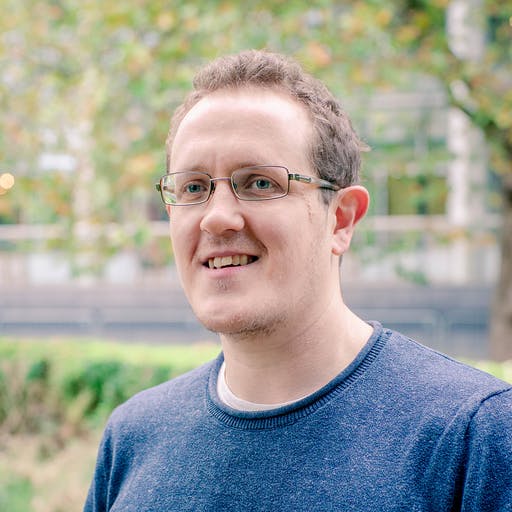
Alla Babkina, Europe Partner at agile consultancy TheoremOne, tells her story of switching from commercial law into technology, travelling across a continent with a cat on her lap, and learning to become a "programmer of people"
Bridges
A lot of ingredients go into the mix to make a leader. A solid support network to create a foundation. The ability to span the divides between different cultures, tools and methodologies. Innate curiosity about what lies beneath the surface.
“If you crossed a bridge that your friend who is not a professional has built, you’d poke the bridge with your foot to check it’s not going to crumble underneath you. It’s the same with software.”
This is how Alla Babkina, Partner - Europe at agile innovation consultancy TheoremOne, explains her technological curiosity, from Front End through to DevOps. It’s telling, though, that she uses a bridge analogy to do so. Hers is a story built on crossing the divides between different technological, professional and cultural worlds.
Acrobatic Rock and Roll
Alla was bridging between multiple fields from an early age.
“I grew up in Latvia, after the collapse of the Soviet Union and it was a turbulent time in that part of the world. My parents tried to ensure that at some point I would have a better life by signing me up for any class, any extracurricular activities that were available anywhere. I did anything from horse riding to acrobatic rock and roll.”
For anyone wondering, this is a two-person competitive dance discipline that, otherwise, is exactly what it says on the tin. Thankfully for the world of technology, Alla was too tall to go far in it.
One of the classes she enrolled in, with more natural aptitude, was Computer Programming and IT Skills, a popular course taught in Latvia at the time.
“I knew how a binary search worked was when I was 11, but I didn’t know what it was called until I was 29! I never made the connection.”
Besides enrolling her in the classes, Alla’s parents nurtured her talent for computer science by investing in a home computer for her to tinker with. Alla dismantled and reassembled the PC hundreds of times in a bid to understand its inner workings.
Despite this passion, technology wasn’t the first avenue Alla explored vocationally. She began higher education in business school, then dropped out after two years because she didn’t like it. Alla then graduated in law, and worked in corporate finance law for the first five years of her professional life. It was during this period that she began to engage in technology professionally.
“I really wanted to solve problems using technology.” Initially these were legal problems, but given her talent, Alla was sucked into solving increasingly large and more disparate problems using tech.
Something had to give, and Alla landed her first job in tech, as a Trainee Java Developer for C.T.Co in 2012 after successfully completing their Java/UI School. During this time, she says, her instructors believed in her more than she did.
Crossing a continent
Underlying Alla’s early-career move from business and law into technology was the positive feedback of friends, teachers and colleagues.
The next bridge she gapped was geographical, and again facilitated by a supportive colleague. Though there was a little deception involved.
Three years after starting with C.T.Co, and via a year-long stint at 4finance, Alla was working for Bondcube’s outsourced team in Latvia.
“My boss at that time really wanted me to come over to the UK to make it easier to build a team here.”
Alla was reluctant. She wasn’t, and still isn’t, a fan of living in London, despite loving the culture on visits. So Mark organised what Alla calls a “fake business trip.”
“He said, ‘Okay I need you to come on this business trip,’ and he brought me over to Winchester, which is where I lived over Christmas. There was absolutely no purpose for that business trip. It was totally made up to bring me over to Winchester over Christmas, which is absolutely gorgeous. It has one of the best Christmas markets in Europe.”
Winchester worked its Christmas charm on Alla, and she soon made the move permanent - relocating her family from Latvia to Hampshire, by car, with the cat sitting on her lap the whole way. The journey took 27 hours, and her family got stuck in a snowstorm in Poland en route. Alla even ended up repeating the journey back, in order to sell her old left-hand-drive car they’d made the outbound trip in once they’d bought a car in the UK.
Despite the influence of her support networks in Latvia on her early career, Alla didn’t find the relocation hard.
“Compared to some of my other former colleagues, I wasn't really attached to Latvia that much. My mum is an immigrant from Ukraine. She moved to Latvia many years ago, my parents’ parents moved all over the place, so we didn't have that very strong ethnic attachment to the country.
“And coincidentally, most of my friends have moved all over the place. So with the exception of my parents, I don't have that many friends left in Latvia. My friends are all over the place, from Canada, New York, Italy, Greece, everywhere.”
Layers of understanding
Like all good technicians, Alla has always wanted to understand how the product she’s building functions, two layers down.
“If you're working in React, maybe don't dig into how browsers work, but you do want to dig into how the framework is built under the hood.
Ultimately, this digging led Alla into the world of DevOps.
“I wanted to know the entire ecosystem of how you would build software from scratch. If I were in a startup and I was the only techie in the startup, how would I build everything from scratch in a way that would scale it really, really fast?
“I already knew Front End, I knew Back End. Infrastructure was where I saw a lot of opportunity for innovation and scaling, and it was one of the last pieces missing.”
After contracting at Sky and Alliants, Alla joined DevOps consultancy OpenCredo. Her two-year tenure there was the first of three positions, including her current one, that Alla has held in consultancies since moving to the UK.
While many engineers feel particularly comfortable in one world or another, Alla, true to form, has worked in product companies - ClearScore and HeadStart - as well as consultancies. Bridging the traditional dichotomy, she feels equally at home in both.
“I'm always learning and it took me a bit of oscillation between consultancy and product to understand where I lean more towards. What I've learned lately is that it doesn't really matter. It is all about the outcomes that you want to achieve.”
Alla does, however, view the nature of the learning opportunities as distinct between the two. She also feels that her previous experience in Product teams makes her a better consultant.
“In a product company you get to learn more about ownership. Being a very effective delivery consultant, and not having worked in a product company, I think is hard.”
Radical candour
Alla’s journey from Latvia to the UK exemplifies a pragmatic resilience, and a constant desire to learn, that characterises the culture at TheoremOne.
This, Alla explains, centres on two key pillars: becoming comfortable being uncomfortable, and radical candour.
Candour comes naturally to Alla. Learning how to accept others’ reactions to that candour, however, took time.
“I had to learn to not be hurt when other people are offended. When you give radically candid feedback, one of the attributes is not just the radicality of it - it's very easy to go into obnoxious aggressiveness. One of the prerequisites is you have to care about, if not the person personally, at least the outcome. So you have to mean well. You're not saying it to hurt them, you're not saying it to humiliate them. And if you made it absolutely clear to the person that you mean it well, it is very hurtful when they react abrasively.
“But what I've learned over the years is to take that with much less suffering than I would have ten years ago.”
Underlying all radically candid conversations is a shared understanding that what matters is the end result, and that frank truths need to be spoken and heard in order to move closer towards it. It is a close and potentially personal feedback loop, in which all partners need to be aware of the positive intent behind the feedback itself, and receptive to its core message.
Alla’s spell at ThoughtWorks, though brief, was foundational in her own attitude towards giving and seeking feedback.
“I think what's changed a lot throughout the last few years is I've started seeking feedback much more actively.
“At ThoughtWorks, as part of onboarding, there was a really fun training about feedback that one of the HR colleagues did. They would take one person out of the room and tie their eyes with a scarf, give them a bunch of pennies in their in their hand. Then they needed to walk into the room and deposit them in an empty bin. The rest of the people were instructed to a give them either helpful feedback, unhelpful conflicting feedback, or unconditionally bad, mean feedback.
“It showed how much how important it was to have good helpful feedback because whenever someone is telling you, oh you're doing it all wrong, you're stupid, you cannot find your way. At the same time, when someone is giving you polite but meaningless feedback, it's not helpful.
“When I got that, when I got the concept, I started seeking feedback much more.”
Full circle
“I have made a full circle in my career and education.” TheoremOne has brought Alla back to where she began; tackling business problems.
TheoremOne’s mission is to enable large companies to innovate at speed, as a start-up would. For Alla, the innovation gap between large and smaller companies is a cultural phenomenon, and it is bridged by understanding the mentality of the people involved.
“What is lost as the company grows is customer focus,” she explains. As companies grow, people begin to forget why they are doing what they’re doing.
“Once you realign that focus across the different groups, things start moving very fast. People get inspired, because they see the value their work brings.” Once this happens the people within large organisations begin to operate more like those in a start-up.
“They become as eager to achieve that first little success as the founder of a three-person app.”
Key to the approach is not accepting historical rules that can’t be brought back to first principles, whilst also not fighting the system. On top of that, TheoremOne’s approach is characterised by bucketloads of tenacity.
“We don’t give up,” Alla declares proudly. TheoremOne haven’t failed a project in 13 years, and are often hired after several failed attempts have been made by other, less tenacious vendors.
Out of 350 people in TheoremOne, Alla's relatively new European division contains less than 50 people. As a Partner, she’s not expected to be hands-on, but circumstances have demanded her to demonstrate extreme ownership by jumping in on the code base.
“Because we had some bumps in delivery, unexpected things including because of Brexit and tax changes, we were so short on hands. And it was COVID times. So people are sick very often. So when an extremely urgent need arises as a last resort, I will jump in.
“I have had to write code in unfamiliar stacks. I’ve had to very quickly pick up C# even though I come from a Java background.
“But you know, code is code. You write tests, you make sure they pass, you do testing and it just works and you lean on some of your teammates to help you out with the tricky bits.”
Coding is an exception for Alla these days though. Her role as a manager focuses on enabling her team members.
“You need to switch into a mindset where you're programming programmers to be better programmers,” she says, quoting a colleague at TheoremOne. “And this is why you need to stop programming.”
Alla sees her managerial role as one of facilitation and servant-leadership.
“It takes a lot of patience and coaching in helping people adopt the mindset that will help them achieve what they want to achieve. And at the same time it is about setting expectations and objectives for people which align with what we as a company need to achieve, which again, is aligned to what the customer needs to achieve.
“It's a combination of objective- and expectation-setting, and helping people grow and build their mindset. We're not saying ‘Here's the mindset, upload it into your head and go with it.’
"People need to connect it to their experiences, to their strengths, to their weaknesses. I have found that helping them build a mental model of how they managed to succeed in the past works best. It is just as important for them to enjoy the process."
Unsurprisingly for someone whose life trajectory has encompassed so much, and who has worn so many different professional hats, Alla’s definition of Best Work centres on learning.
“Take work as a way to have fun, but continuous, continuous learning.”
She also stresses the importance of doing so on our own terms.
“You might not fit into a bubbly startup but try and find a path to be your best self at work.
“It’s making your best contribution to the world, whatever that means for you. A balance between what you give to the world that you get from the world and how you build a happy, balanced life for yourself.”
Was this content useful?
Table of contents
Highlights
Alla Babkina, Europe Partner at agile consultancy TheoremOne, tells her story of switching from commercial law into technology, travelling across a continent with a cat on her lap, and learning to become a "programmer of people"
Discussions you may like
Learning at work
Discussion started over 6 months ago.


Receiving feedback
Discussion started over 6 months ago.

Becoming a better manager
Discussion started over 6 months ago.







You might also like

Professional knowledge
Leader Bio - Elliot Banks
Chief Product Officer, BMLL Technologies

Professional knowledge
The most in-demand tech skills for 2022
cord data on primary skills and requests assessed to determine the most sought-after technology skills for 2022

Understanding compensation
How much do AWS Engineers earn?
AWS Engineer salaries broken down by experience and seniority, as well as position salary listings

Working remotely
How much do remote Infrastructure engineers earn?
Remote Infrastructure engineer salaries broken down by experience, seniority, associated skills, and position salary listings