 cord
cordDeveloper demand in Europe
Average message requests received by engineers examined to reveal the most in-demand development skills

Demand for European engineers
Developer demand
This article focuses on remote engineers in Europe and compares the demand level of different development skills in different countries. Demand is calculated by dividing the number of developers listing a particular skill on their cord profile by the total number of messages companies have sent to these developers.
Skillset demand - all countries
Across all countries included in the data set, the average number of message requests received per engineer was 4.8.
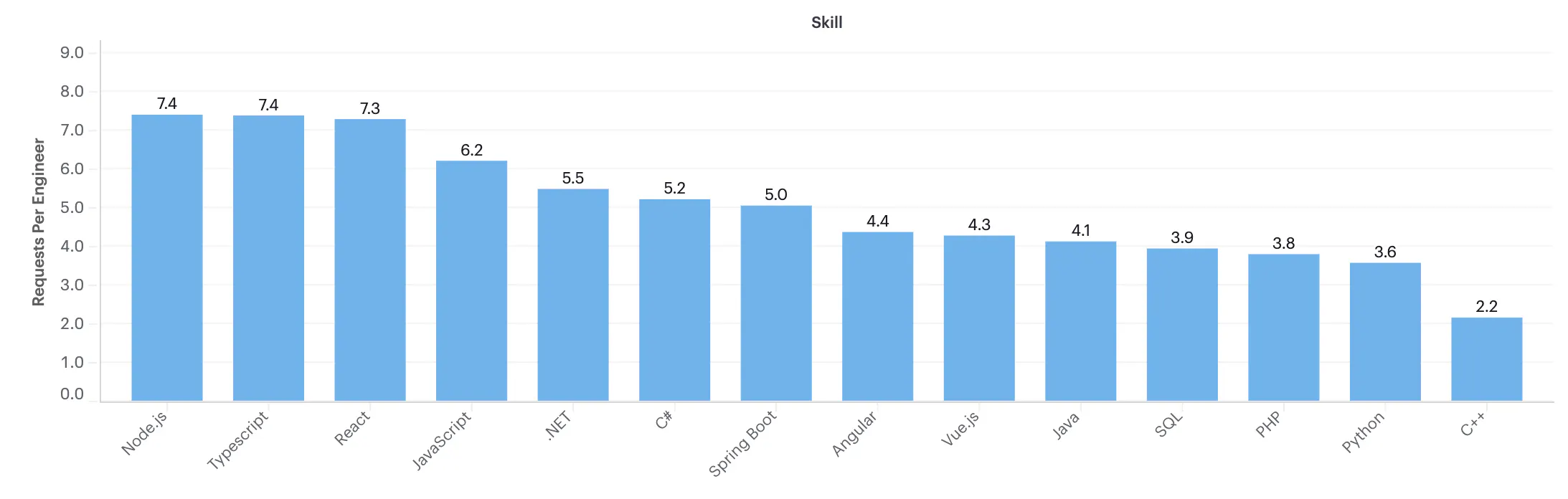
Node.js is the most in-demand development skill in Europe, followed by Typescript, React, JavaScript and .NET - though there is a drop-off between the 7.3 messages the average React developer receives and the 6.2 messages that each JavaScript developer receives on average. Developers who know C# and Spring Boot also receive more message requests than the average developer.
C++ was the least in-demand of the most popular development skills, with just 2.2 messages received on average per engineer. Angular, Vue.js, Java, SQL, PHP and Python are all associated with below-average numbers of message requests from companies.
Skillset demand by country
The following graphs display the average number of messages received per engineer listing that country’s most popular development skills in their cord profiles.
Belgium
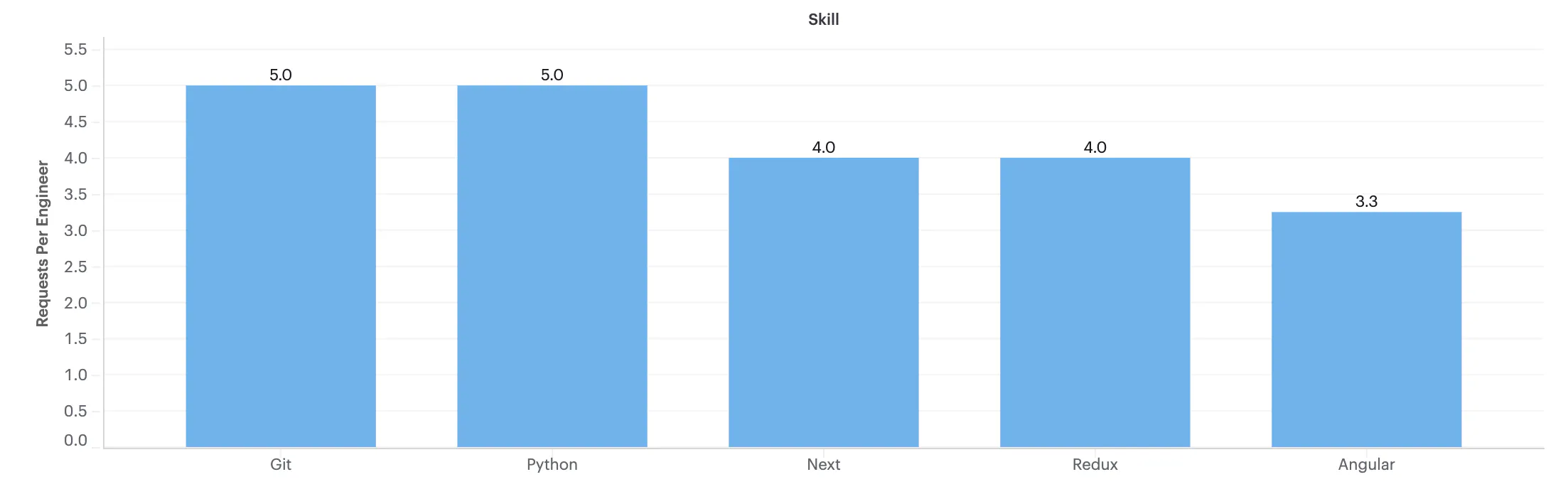
Belgium-based developers who know Git and Python are the most in-demand in the country, followed by those who know Next, Redux and Angular.
France
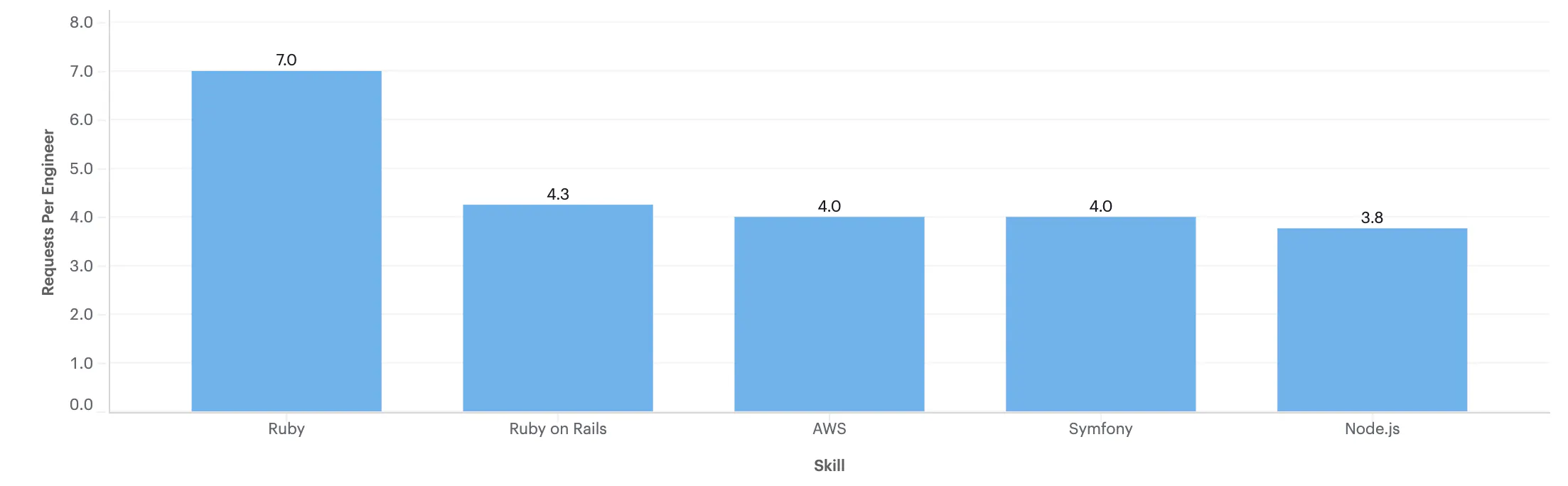
Ruby is the most in-demand development skill in France, followed at a distance by Ruby on Rails. French developers lacking Ruby tend to receive fewer message requests than the average European developer.
Germany
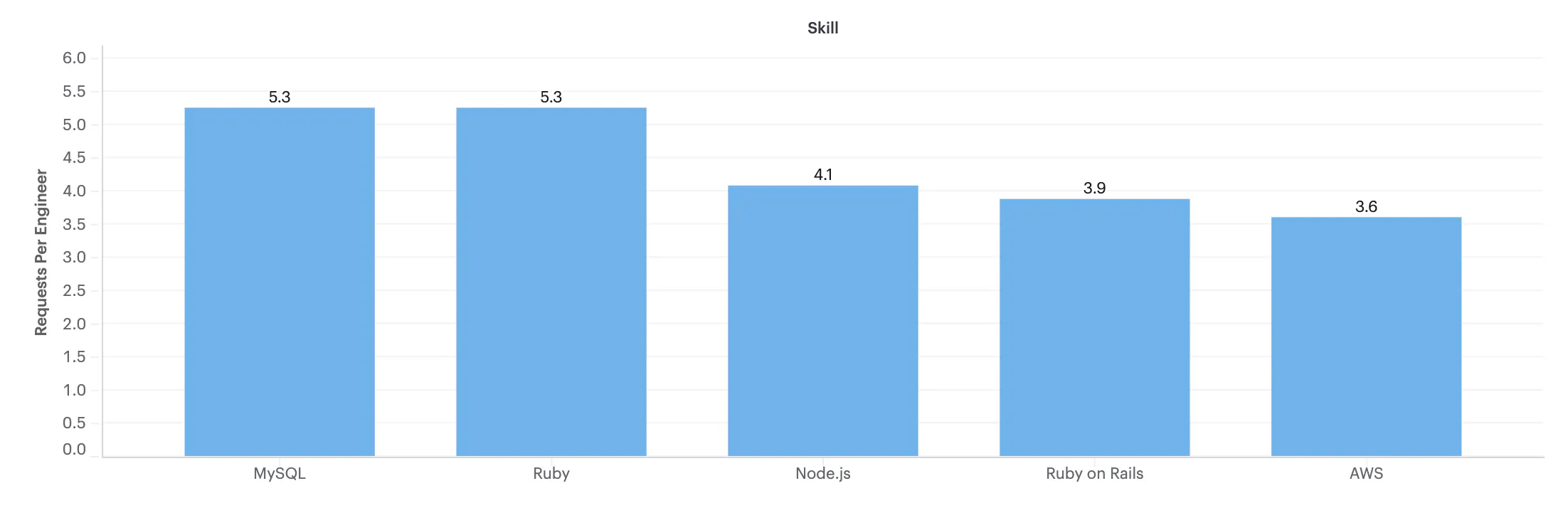
Among the five most popular skills in Germany, MySQL and Ruby are most in-demand. The next three most sought-after skills for German developers - Node.js, Ruby on Rails and AWS - are all, in Germany, associated with fewer message requests than the average European developer.
Ireland
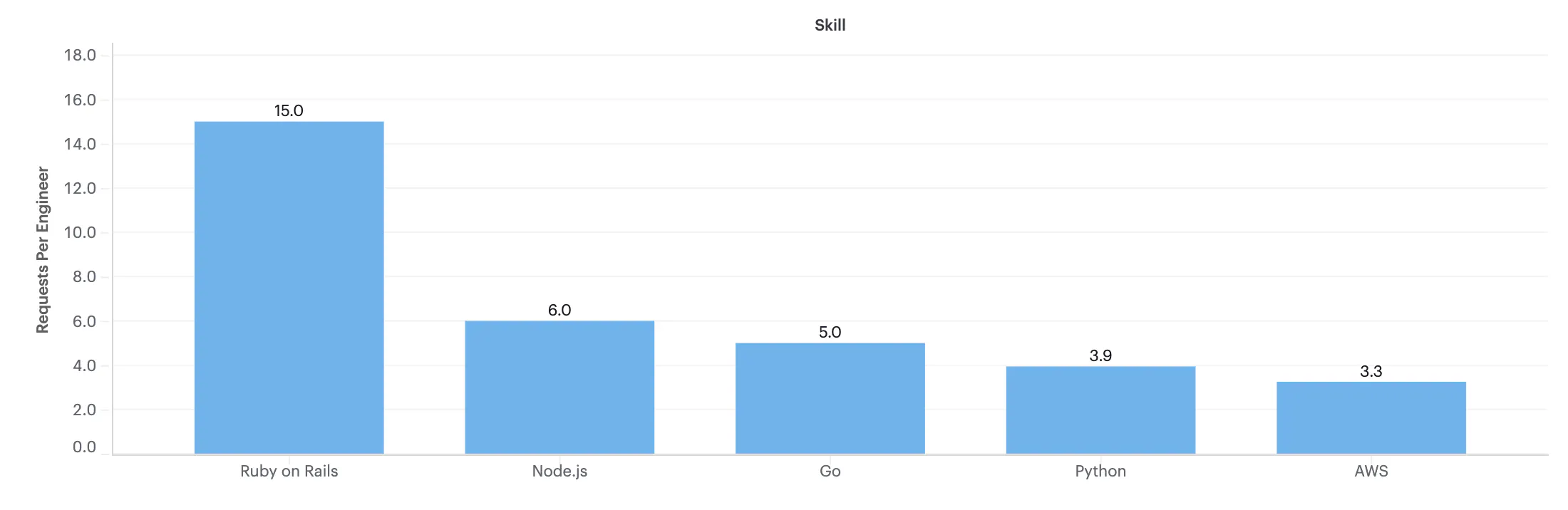
Ireland-based developers who know Ruby on Rails are the most sought-after in Europe, averaging 15 message requests each - more than three times the European average. Node.js and Go also raise the average number of message requests Irish developers receive above the European average.
Italy
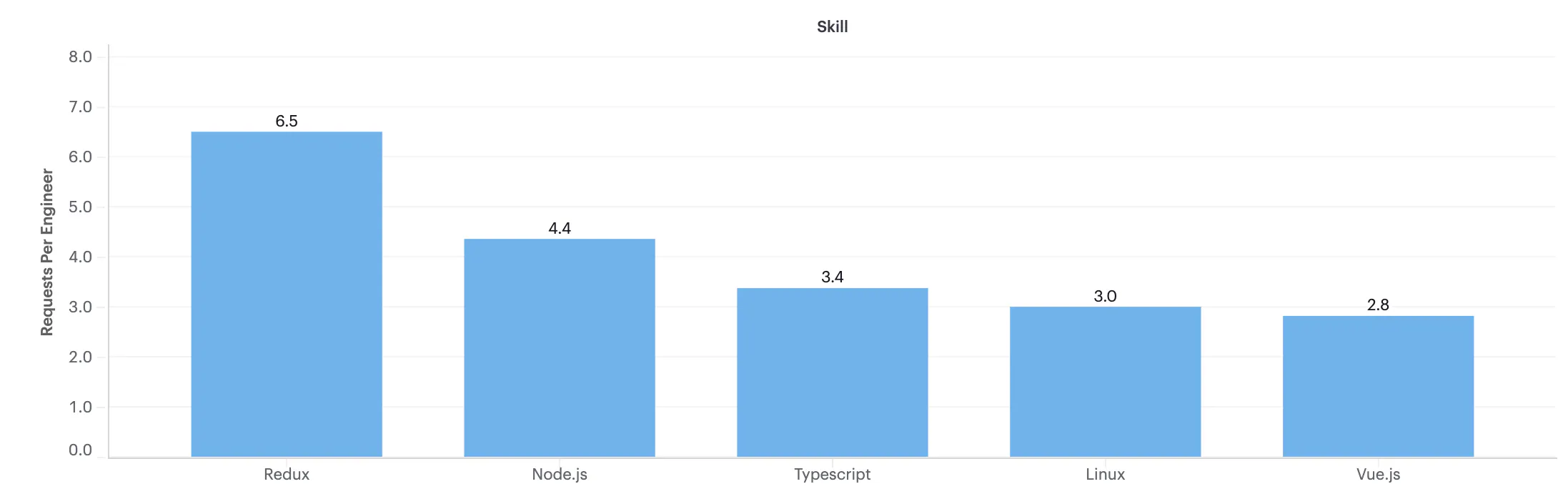
Redux tops the list of in-demand skills for developers based in Italy, and is the only skill in the country that raises the demand for Italian developers above the European average.
Poland
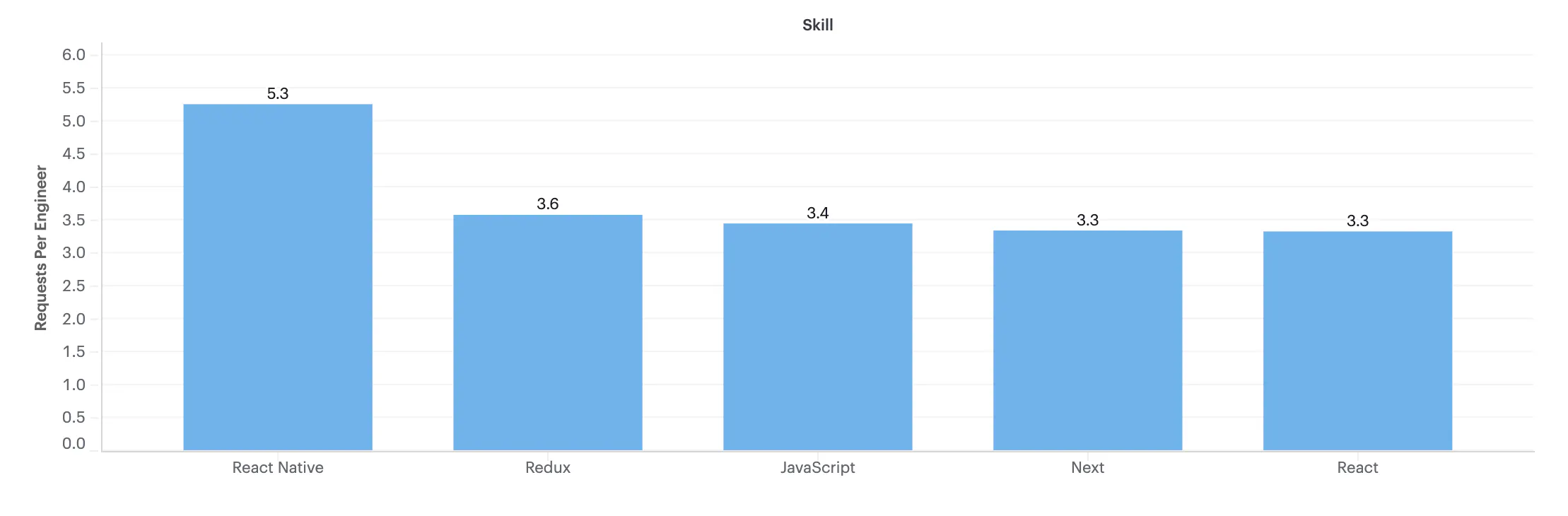
React Native is the most in-demand skill among developers based in Poland with an average of 5.3 message requests received by engineers in the country listing this skill. Redux is next on the list, with an average of 3.6 message requests per engineer.
Spain
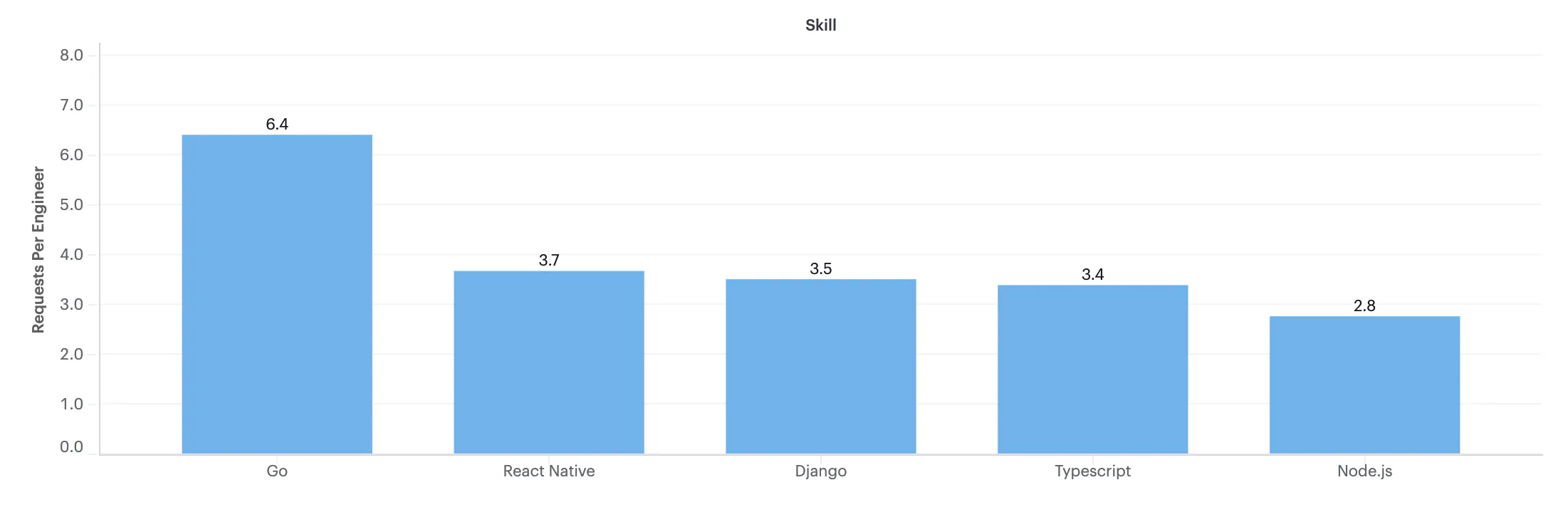
The average Go developer based in Spain receives 6.4 message requests. Spain's next most in-demand development skill, React Native, typically sees 3.7 message requests per Spanish engineer.
Sweden
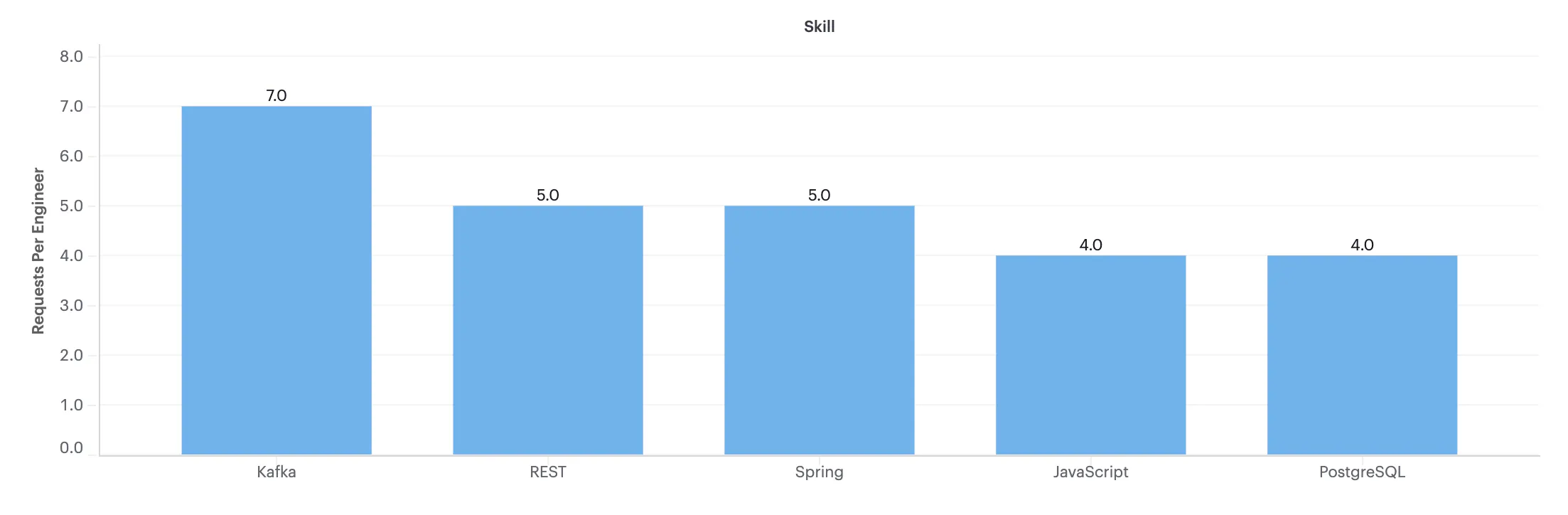
Developers based in Sweden who know Kafka are in high demand, with an average of 7.0 message requests per engineer - nearly 50% above the European average. REST and Spring also see Swedish developers receive more than the European average number of message requests.
Switzerland
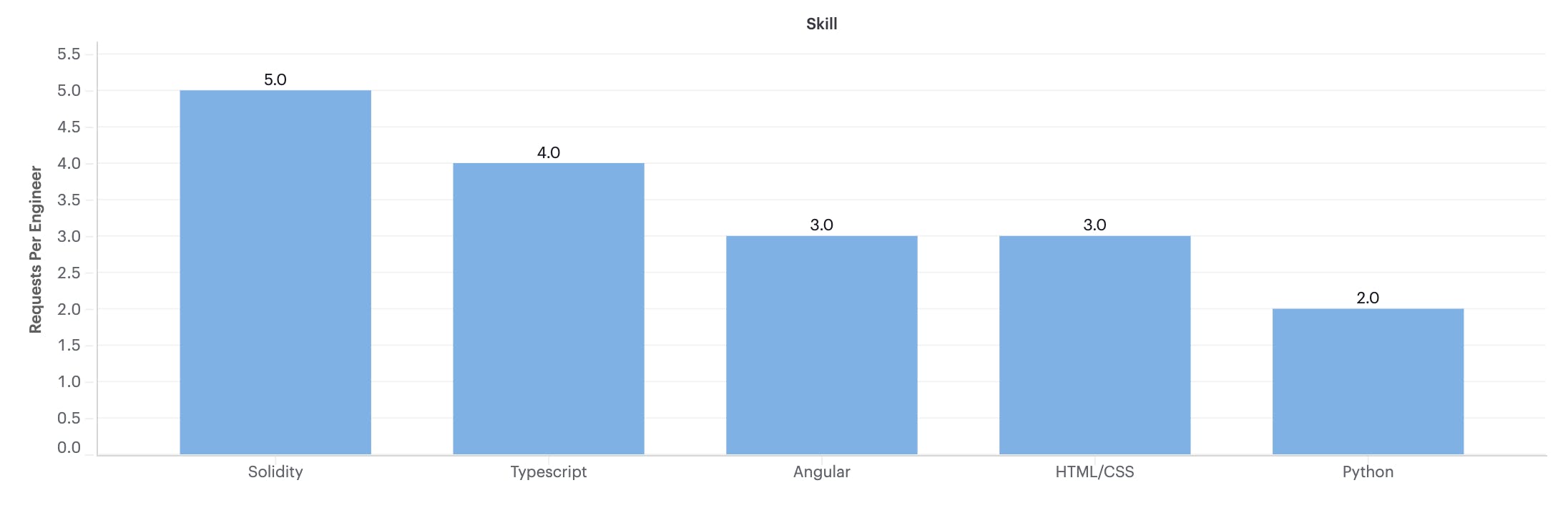
Solidity, with an average of 5.0 requests per engineer, is the most in-demand development skill in Switzerland. At fifth on the list is Python, with the average Swiss-based Python developer receiving 2.0 message requests on cord.
Key Insights
- The average European developer receives 4.8 message requests on cord
- Node.js, Typescript and React are the three most in-demand development skills across all European countries
- The most in-demand group of developers in Europe are Ruby on Rails developers based in Ireland - these receive more than three times as many message requests as the average European developer.
Data Disclaimer
This piece focuses on remote working in Europe. Data is drawn from engineers based in ten countries:
- Belgium
- France
- Germany
- Ireland
- Italy
- Poland
- Spain
- Sweden
- Switzerland
- UK*
*Only engineers based outside London and/or exclusively looking for remote work have been included in the data set.
The dataset covers 2,023 engineers.
A "message request" means an invitation from a company user to begin a conversation with an engineer, regardless of whether or not the engineer accepts that request.

Was this content useful?
Table of contents
Highlights
- The average European developer receives 4.8 message requests on cord
- Node.js, Typescript and React are the three most in-demand development skills across all European countries
- The most in-demand group of developers in Europe are Ruby developers based in Ireland - these receive more than three times as many message requests as the average European developer.
Discussions you may like
Working from home
Discussion started over 6 months ago.



Working overseas
Discussion started over 6 months ago.





You might also like

Working remotely
Average remote developer salaries in Europe
Engineer and position salaries on cord across Europe examined by seniority level and primary skill

Working remotely
How much do remote product designers earn?
Remote product design salaries broken down by experience, seniority, associated skills, and position salary listings

Working remotely
How much do remote software developers earn?
Remote Back End, Full Stack and Front End developer salaries broken down by experience, seniority, associated skills, and position salary listings

Working remotely
How much do remote Infrastructure engineers earn?
Remote Infrastructure engineer salaries broken down by experience, seniority, associated skills, and position salary listings

Working remotely
How common is remote working in UK Tech?
The numbers behind the rise of remote tech work following the pandemic