 cord
cordMaking big career decisions
Anonymous, Unknown
over 6 months agoHow do I know when it’s time to leave a company?
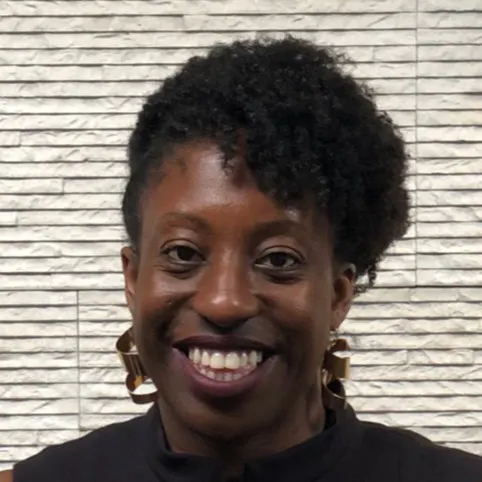
Charlene Hunter MBE, CEO & Founder, Coding Black Females
over 6 months agoAre big decisions compatible with risk-aversion?
When I actually think about it, I think I'm a risk taker, but I'm not actually a risk taker at all. I'm actually extremely risk averse from what I can see. So I did a shedload of planning to say, "Okay, if we do this, the reason I'm not going to..." I could obviously have taken income for myself at that point, but I knew that I wanted to make sure that we had an option for the future. So I then looked at how much we'd need to have an option to have people on board in the business for a certain amount of time. So we saved that essentially, so that we could do that.
And then, I thought about the direction that I wanted the business to go in. And then, a lot of planning went into that and I built out the right elements that we needed. I got the right people on board, that would be able to make that happen. So there's one side where you're like, "Oh, it just fell in your lap." There's another side where it was actually extremely planned and I thought these things fall in my lap, but actually, I've been thinking about it for years.

Kate Pljaskovova, Founder & CEO
over 6 months agoHow can I get past career FOMO?
I really rarely think about the opportunity cost of my choices. Because as long as I'm learning and my learning curve is really steep, that's where I want to be, if I'm learning about something that I'm excited and curious about. If I'm not, I want to stop.

Máté Gulyás, CEO, Datapao
over 6 months agoCan writing help me make decisions?
When I have to think about something, like for instance, what should be the structure of one part of our organization, what kind of partnership we want to do with certain companies, now I just write an essay.
And actually it turns out, again, as most of the wisdom, this is pretty old wisdom. But when you're writing an essay, you're just going through the same... You're just basically improving the ideas you have. And when I'm thinking, I cannot hold my thoughts at the same time in my mind. It's more like a conversation. You're going from one place to another. But when I'm writing this down, it's basically, I physically burn this into a paper so I can come back and revise, or I do this digitally, but the same thing. So essay writing is a great way to explore a certain topic.

Paul, CTO
over 6 months agoIs it OK to get decisions wrong?
You've got to be kind to yourself. Accept that you're going to fuck things up. I think this is the thing. It's really okay, in fact, it feels pretty good when you are able to say to yourself, "Yeah, I'm going to fuck things up sometimes." And it's sort of one of the things, a different conversation, one of the things I often have said recently to a few folk is, "Part of my job at this stage of company is to make decisions pretty quickly and recognize that I need to be right most of the time, but I'm also going to be wrong some of the time. That's actually okay." If I'm right, eight decisions out of 10 and wrong two times out of 10, but I make those 10 decisions faster than you make three, than I'm doing really, really well.
But you need to give yourself permission to be okay with the ones that you fuck up. And obviously there are some bet the business decisions that happen, but most of them aren't that. And companies are resilient. People are resilient. Technology is resilient. And I think the other way is if you treat every success and every failure, but particularly every failure, as an opportunity for you to learn, why did you get it wrong? Why did you make the decision? Did you make it with the best information at the time? Could you have gotten more information before that decision? Would it have affected the outcome anyway?
People
Anonymous
Charlene Hunter MBE
CEO & Founder, Coding Black Females
Kate Pljaskovova
Founder & CEO
Discussions you may like
Identifying my inner motivation
Discussion started over 6 months ago.



Defining my best work
Discussion started over 6 months ago.







How did you know when your time was up at nate?
Oh, that's an interesting one. I think it comes back to my values and also listening to feedback. And so that was probably the point when it was starting to become the beginning of the end for me in that as a business I do think we could have done more to listen to feedback from the market in terms of what they're telling us and also continue to hold true to the values and the ethos of the business that we set out to build. So for me, while it is a difficult point to reconcile how much, in many ways, blood, sweat, and tears was put into getting an early stage startup from four people when I joined it to 40 people when I left, but I think there comes a point, especially for myself, and it's become more apparent over the years as well, that it really is extremely important to myself that the values of the organization that I work for highly align with my personal values.
What's underneath that? What do you mean?
So in terms of a lot of it comes down to feeling like I am authentic and that the work that I'm doing is aligned with what I believe in and what I think as in what I stand for as a human being as well. And from multiple aspects, that would come out in terms of how we interact with each other, how we care for our users, how we care for the world that we're living in.