 cord
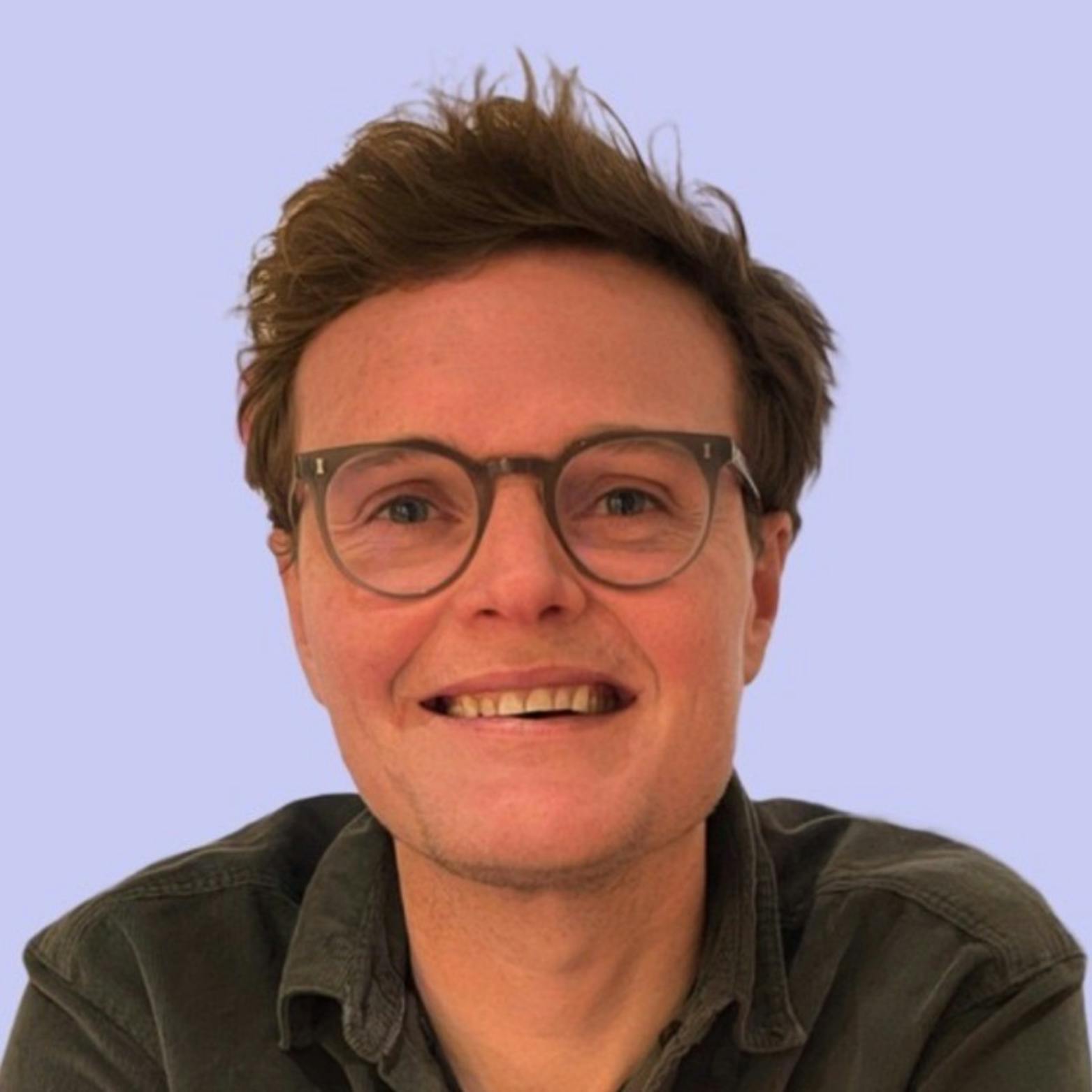
cordThe grass is green where you water it - Sophie Pesenti
How to be intentional when finding work
Transcript
Sophie Pesenti
00:00
When you first step into that world, I think, maybe you might have assumption that it's more linear than it is in reality. I feel like maybe you have that idea of, yeah, I could be a product manager, but when you get into the nitty gritty side of things, you discover a world that you would probably never have expected before. I mean, that was my initial feeling when I started. It was like, wow, there is so much to learn and to be better at, and it's an exciting place to start, really. Especially for me, I've been living in the UK for 10 years. I've moved back to France but I still work for a UK agency. I think there's people like me out there that have different type of cultures as well, that are mixed, which also makes things not more complex, but just more rich in a way. And it's important to appreciate that, yeah, people do have context and do have situations that are very personal to their own self.
Ben Henley-Smith
01:03
How has being a part of different cultures affected the way that you've found your best work?
Sophie Pesenti
01:09
I think it has helped me challenge the status quo in a way. And also to me, it feels like to do your best work you have to consider different perspectives, right? You shouldn't really be convinced that your own opinion is always the best. And I believe that having lived in many different countries really taught me to be very open to perspectives, having discussions with people from different backgrounds and reaching the way you see the world by bringing different opinions and people that might not have the same views as you, but listening to them, understanding their point of view, empathizing with what they might feel and think, so that it also helps you gain a better understanding of the world and therefore do better work because you can approach a problem from many different angles and be like, oh, well, right now I think this because X or Y.
Sophie Pesenti
02:22
But if I would tackle the problem from another angle, then I might find a better solution or just an alternative solution that might be equally as good. But I think that's really good. For me that's one thing that I value in people and also I try to foster that skills in me is try to never be too narrow minded. And I think having lived and still living in different cultures helps with that, sort of things.
Ben Henley-Smith
02:55
Did you find there's same odd experiences in your first product role?
Sophie Pesenti
03:00
I think encompasses many different aspects, like you have to consider the business strategy side of things, you have to understand your users, you have to be interested in how you create experiences for those users and how they are being built from a digital point of view, so you have to have some sort of technical knowledge as well. So when you first step into that world, I think, maybe you might have assumption that it's more linear than it is in reality. I feel like maybe you have that idea of, yeah, I could be year product manager. But when you get into the nitty gritty side of things you discover a world that you would probably never have expected before. I mean, that was my initial feeling when I started, it was like, oh, wow, there is so much to learn and to be better at and it's an exciting place to start really, but yet.
Ben Henley-Smith
04:06
I mean, you're coming from a brand new culture, like how do you get your first break into product, and then what made you move on from Nice?
Sophie Pesenti
04:13
So I did the masters in digital technologies, and it was part in Sweden and part in the UK, so I finished it in London. And then I thought, well, I'm from a small resort in the Alps, which I will not go back to just yet, I don't want to go back to Paris because that's not a city I really enjoy living in. So London seems the perfect place to find a job, the digital and the technology industry is booming, so I will stay there, which I did.
Sophie Pesenti
04:46
And then I was looking around for jobs, but I specifically didn't want to commute a long time. So I just looked at agencies around me, I knew I wanted to be focused on mobile, because at that time I was really interested in apps, what you could do with those, like just being in the fingertips of people, that was something that I wanted to explore. So that's how I just came across Nice offering and Nice Agency and there was a job role available at the time. So happened organically, really, I needed a job in that specific field and they were offering this and the culture that Nice had at the time and the people were a really good fit for me, so it was a no-brainer
Ben Henley-Smith
05:39
What made you move on?
Sophie Pesenti
05:39
The agency grew a lot in a short amount of time. So we were Nice and then we got acquired by Karmarama, which is more of a 360 advertising agency, and then the whole entity got bought by Accenture. So it was an amazing transition to be part of and to see how these merging and acquisitions are taken part, what it does to the culture and what it does to the work, like we go to work on bigger and more complex project, which was amazing. But for me, at some point, I thought, well, it's getting too big for me to enjoy the work and for me to see the impact I have. So then that's what really created a desire to go and explore something else.
Ben Henley-Smith
06:27
And since you've done lots of different things, you've worked at where behavior like the bio leadership project... And all of that in the same shorter span of time than you were at Nice, is that a conscious choice?
Sophie Pesenti
06:44
Yeah, because then I thought, okay, maybe a bigger agency model doesn't really fit who I am and what I want to get out of work. So I just set up my own consultancy and started picking and choosing the partners I wanted to work with and the projects that got me excited the most. So all of the guys you've just mentioned have been people I've reached out to or people I've met during events, or I've been introduced to and thought, oh, yeah, there is a synergy there, we could do something. Your offering is interesting, your purpose is aligned with my values, and I could have something to give you and vice versa. So at the time it felt like a conscious choice and a good choice.
Ben Henley-Smith
07:36
How did you pick up the resources and the infrastructure around you to be able to take that jump? So many people may might worry that they don't have that connections that they need or that they haven't got those projects lined up. Did you have those projects lined up?
Sophie Pesenti
08:00
Oh, no, would've been too easy. I just went for it and I followed my gut. I think it was a bit of a leaper face. I knew I had something to offer, I knew I could create connections with good people, and I wanted to do very specific type of work around obviously product strategy, work shopping, working with project that have a positive impact on the world. So then I really just narrowed my search and became very intentional in finding those people that could align with me.
Sophie Pesenti
08:38
But in terms of sources, it was a lot of events attendance putting myself out there so that I could grow my network, sending messages to people, reaching out on LinkedIns to try to create new connections, reigniting old friendships or old work relationships as well, and discussing with people that might have gone through that leap of faith earlier so that I could find people that I could relate to and maybe bounce ideas with and discuss about the fear or the fears that I was facing and the challenges that I was facing just to understand, oh, are they only related to me and my situation, or is it more something that every freelancer and every business owner is facing, which also made things not easier, but at least made things more easy from a mental point of view. It's like, suddenly you are not alone in that struggle. Does that make sense?
Ben Henley-Smith
09:52
You said that you have been intentional in the way that you've gone about finding work. I think that's something that all of us can aspire to be. How have you developed that intentionality? How have you become so intentional in the way that you pursue work?
Sophie Pesenti
10:13
It's a tricky one, because there is a lot of criteria that might impact how intentional you are about something. But, let's say, now I've been around for 10 years, 12 years, in the industry, let's say, and I've worked on many projects, I've worked for many organizations with many different type of people. And I've gathered enough information for me to know who do I like to work with best, what sort of things I like to do the most, and what sort of impact do I want to have on people, in general? So then based on this value set, I can be not judging because judging is a negative word, but I can be evaluating if a project or if an organization is right for me based on that.
Ben Henley-Smith
11:15
Sounds like as you've gone through the experience is the same, where you let a certain amount of your experience through and it becomes locked in.
Sophie Pesenti
11:24
Yeah. And sometime because of X or Y, Z reason, you can't always be intentional about these kind of things, or you can't always pick and choose because we don't live in an idealistic world. But, I think, the more I evolve in my career, the more I want to be surrounded by people I really look up to, the more I want to do project that have a meaning and have a really useful impact on people, and the more I want to be aligned with that internal value system. And sometimes there are still things that are in contradiction, cognitive dissonance is part of my life as well. But it's a long process to try to align all of these things and be intentional, I would say.
Ben Henley-Smith
12:19
How have you balanced caring about your own best work with causes that are greater than yourself? They're sometimes tricky to balance from this pursuit of our own best work, but at the same time, like you said, it has to be a part of a wider picture. How do you pursue your own best work and do good work by others at the same time?
Sophie Pesenti
12:45
I don't think I can pursue my own best work without other people, without my team, without the leadership team I'm part of, without the clients or the partner I work with. So I try to be authentic and true to myself when I show up to work, when I run a meeting, when I deliver a workshop. And I try to get people on a journey so that they feel comfortable being their own self as well. And ultimately we will try our best to do our best, and it creates something good or even great of the time. When you know that people are trying their best, I think for me, one of the base layer of good work is people are trying, it can't always be the best work you do, but if you put your whole heart into the mix, try your best to deliver the best of your abilities and don't fake it, then you've done a good part of the job.
Ben Henley-Smith
14:01
How do you develop that authenticity and that self-awareness of who you are? Because it's really, really tricky when you are having to fit into that wider world to uncover through your experience, what the things are that mean the most to you. How have you gone about that?
Sophie Pesenti
14:24
Before I answer, can I ask you a question, Ben? When you say you need to fit in the bigger picture, you need to fit in the bigger world, do you?
Ben Henley-Smith
14:41
Maybe to a certain degree, perhaps. There's almost like maybe a meeting of two worlds where you have your own passions that are actually informed by the outside world. But then you also have the same market where you want to fit into it somehow.
Sophie Pesenti
15:02
Yeah. Some sort of professionalism and rigor and then the rest you can be your [crosstalk 00:15:06]
Ben Henley-Smith
15:05
Like, how do you get the two together?
Sophie Pesenti
15:05
Yeah. It feels like sometimes people try to be something that they might not be, or sometimes you can take inspiration from many different places, you can look up to people, you can have a really inspiring boss. But to me at the end of the day, it's important not to try to copy anyone else or be someone you are not. But it takes time to listen to yourself to understand what do you care about and why do you care about these things? But also from a value point of view and from characteristic trait of your personality, you are this person, why do you care about these things so much? Then you do some work on yourself to understand that.
Sophie Pesenti
16:21
Yeah, it's a tricky question because I agree the feat and how you uncover your authenticity is not something that can be ever finished, I don't think. Because as human beings we always evolved, we adapt to the situations we are being put in. But ultimately when you do something, if it's not aligned with what you think is right then you should speak up. And for me, that's how I've lived my life and the way I work is like, let's all create something that is aligned with what we think is right. But then if at some point in the process you disagree or something doesn't feel right, or you think something is not ethical or that you think you might screw up, then you need to say it, you need to find a solution. You should never go down the path of pursuing something that doesn't feel right. Because, I think, maybe it's intuition, maybe it's a mix of intuition, is an experience, but at some point you know that this is not the right path.
Ben Henley-Smith
17:32
How do you balance when to know that you are being the most real, an authentic version of yourself? Whilst also recognizing that self is changing as you go through this journey. How do you know how far out to go? What's growth and just doing something that's not me.
Sophie Pesenti
17:54
Maybe it's the reasons behind why you do these things. Sometime you might do something because it has to be done, and that's part of your role. And sometime you do things because you might think, oh, this is something I'm not truly good at and I want to be better at. Or, oh, this is an area where my team identified an opportunity for me to be even more performing. Or you know that you are not good at public speaking, you might be intentional about putting yourself in an uncomfortable situation so that you become better at this kind of thing. So for me, growth is about maybe exploring new avenues and new unexplored ways, whereas other, maybe, things that you might have been doing for a long time that are acquired, let's say, then they become standard. And it doesn't mean they are not things that are not in alignment with you, but it's more like, oh, that's the routine.
Sophie Pesenti
19:12
And when the routine is too much of a routine and you don't have innovation, or focus time to think about other more longer and strategic things, then this is where you might feel like, oh, I'm like stalling. And then you might question, oh, why am I stalling, do I really want to naturally explore anything new right now? Why is that? Or do I want to carry on learning? And the balance is tricky because, maybe, like for the moment, I'm still super curious and hunger for knowledge and that's me, but maybe in 20 years I'll have enough, I don't know. But there's always things to be discovered and things that you can consume in a way that makes you happy.
Ben Henley-Smith
20:13
You have a lengthy experience, that's gone on over prolonged period of time and then you've got lots of small ones and it strikes me that you must have developed your own framework to know when to quit?
Sophie Pesenti
20:28
Yeah. But interestingly enough, I'm back working pretty much full time for an agency and it's been two years. So it's just about fit. It's about what you give to these people and what they give back to you and the thing you co-create together. And at the moment it's still challenging, enjoyable, I'm working with passionate people that are super clever and it's an amazing environment to evolve within. But if at some point I feel like, yes, if things are changing or if suddenly things are not aligned with what I think is best for the company, but ultimately, also for me and how I can help the people within the company then, I think I'm not the one to stick around for years and be unhappy. I will try to make things work for long time, change things and work out what's not going right and why.
Sophie Pesenti
21:35
But at some point I'm not going to kill myself if the results are not there. I'm happy to acknowledge that, maybe things are changing and that's totally fine and you go separate ways. But it doesn't mean that these ways can't ever be reunited again, like all my past colleagues that became friend, and it's a small world, you keep those relationship going because most of the time they are, healthy and people are grownups and are good to be in touch. So it's not because you quit that is the end of the journey.
Ben Henley-Smith
22:17
Why say something interesting which is that the biggest obstacle, the biggest challenge for anyone starting a company is giving up. And the thing that they look for in their assessment process are people who are like cockroaches, people who will see through the really dark times. And it really surprises me that is the thing that the whole selection process is designed to work around. Is this person going to see it through when everyone else's logical sense will say, you should give up now. How do you couple that way of thinking with the inner feelings we get where the environment might not feel quite right, and we're not quite getting the most out of the environment that we're in. If the truth to a successful company is that you see it through even when it's really hard, how do you know the difference between the two?
Sophie Pesenti
23:24
I think the second is about creating something as a team. The first one is about you as an individual and your satisfaction, and the second one is, if you've decided that you are up for a challenge, if you've decided that you've got a senior role in an agency, your impact is huge and therefore the duties that come with that role are also massive, right? But for me, sometimes are challenging, sometimes they are smooth and everything flows. But most of the time work is about facing difficult situations. So if you quit as soon as it gets tough, then I don't think it's a sign that you are able to persevere and be solution driven. Because, I think, through tough time, beautiful things can emerge and important discussions can be had, collaboration can be increased. There's a lot of good things that can come out of this.
Sophie Pesenti
24:39
So for me, resilience and perseverance are also important skills and traits of leaders because ultimately, it's never easy. You always have people problem, you'll always have money problems, you'll always have growth problems. But it's about finding solutions, not that you can always find solutions, but it's about finding ways to make it true. And that's what also interesting in work is how do you make it true and still keep your satisfaction and fulfillment real?
Ben Henley-Smith
25:21
Sounds like what you're saying is very similar to one of the quotes that you've used in the past. There are always flowers for those who really want to see them.
Sophie Pesenti
25:30
Yeah. Mattis was quite right. That's one of the quote, I think, I live my life by. The grass is green where you water, it's similar. You need to put the effort so that you see those flowers or you keep pushing so that you take more positivity out of some situations that might seem negative. It's never either black or white, I don't think life is not like that. It's like there is always good things to be taken out of bad situation, I would say.
Ben Henley-Smith
26:16
The grass is always greener where you water it. And makes a lot of sense, given that you have been intentional about where you've watered your patches of grass. I've loved our conversation, Sophie, thank you for taking the time out.
Was this content useful?
Start using cord
The messaging tool for finding work

Senior Product Manager - Financial Crime (Fraud Prevention) at Ebury

Partnerships Operations Manager at Simprints
You might also like


Maria Boghiu
Becoming the shape of your work - Maria Boghiu
How therapy, self-knowledge, and love guide our biggest decisions
Rami Kalai
Refugee to Founder - Rami Kalai
Entrepreneurial roots, when to pivot, Founding a start-up and doing your best work
Theo Chichirita
Finding work spontaneously - Theo Chichirita
How luck and being in the right place can make the difference

Paul Egan
Mazes, mountains and jungles - Paul Egan
Navigating the here-and-now with the bigger picture in mind

Katie Hindson
The rewards of introspection - Katie Hindson
Becoming a Data Scientist, working at Monzo and knowing enough about yourself to say no