 cord
cordTalent Landscape Report: DevOps
Data-led insights on the salary, availability, demand and preferences of engineers looking for work in DevOps.

Introduction
The Talent Landscape Report focuses on DevOps Engineers and provides data and insights on candidate and competitor salaries, candidate preferences, availability and demand. It's designed to help Talent Teams make data-led decisions, by drawing on 80,000 data points across 3338 DevOps profiles and 325 positions.
Key Insights
Disparity between candidate and company salaries
As with our Talent Landscape Report for Developers, we’ve found companies are consistently paying higher than the average candidate is expecting.
- GCP is the skill with the largest disparity, with a gap of £30,211. This is also the highest paid skill, with an average company salary of £113,056.
- Java skills have the highest average expected salary from candidates, at £84,591.
- Ansible has the lowest average advertised salary, despite being the second highest in candidate expectations.
Most in-demand skills
The Demand Index gives insight into the competitiveness for each position. The higher the index score, the easier a position should be to hire for. You can utilise this for setting your strategy, with the knowledge that those positions with the lowest Demand Index will likely be harder and take you longer to fill.
- For positions with low Demand Index, you’ll need to go above and beyond your normal process, and plan hiring to allow for long lead times.
- Compare Demand Indexes where you can be flexible on requirements. E.g. a Junior DevOps Engineer has a much higher Demand Index than a Mid Level. Could you hire and train a Junior, rather than a Mid Level, to increase your chances of hiring?

Candidate preferences
DevOps Engineer is the most popular job title with 65.47% of candidates, however, just 48.81% of companies call their roles DevOps Engineer. At the same time, Site Reliability Engineer is a much more popular job title with companies (22.25%) than candidates (just 9.79%).
Whilst there are differences between these two positions, in practice there is enough skill crossover that a Talent Manager struggling to fill a Site Reliability Engineer position could consider focusing on DevOps Engineers as well in their search.
Skills: Salary, Availability, Demand
Below, we've drawn comparisons between the most popular technologies being hired on cord. In order to draw accurate comparisons, we’ve focused purely on Senior DevOps Engineers.
Salary
The average salary for Senior DevOps Engineer with this technology as a core skill, compared to the average salary being advertised by companies for this core skill. We have focused on the 10 most popular skills on cord.
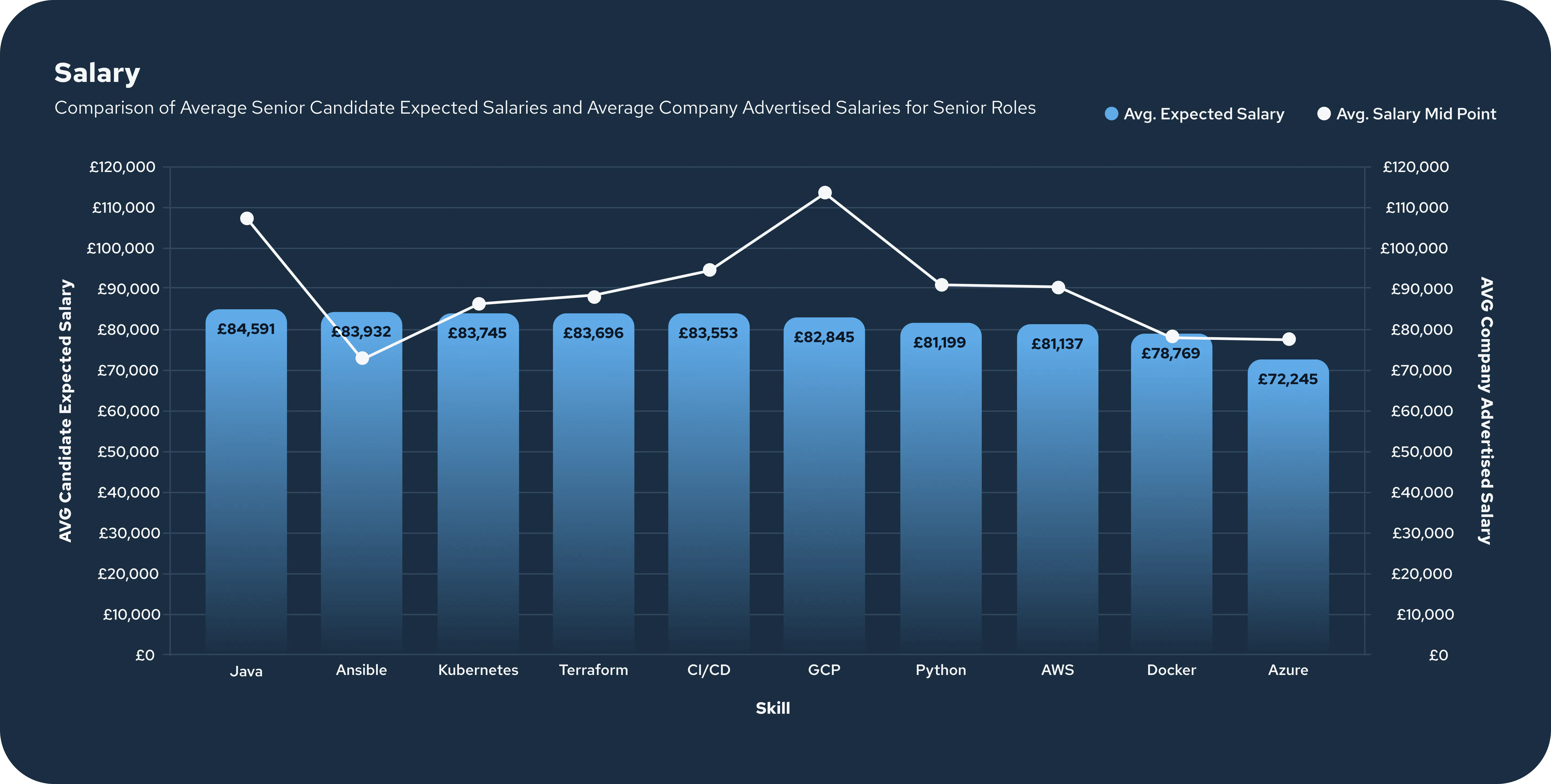
- The skill with the largest difference between expected and advertised salaries is GCP, with a gap of £30,211. GCP also has the highest offered salary by companies at £113,056.
- Ansible has the lowest average advertised salary from companies, despite being the second highest in candidate expectations. It is also the only skill where candidate’s expected salary is higher than the advertised salary, with a £11,611 difference.
- Java skills have the highest average expected salary from candidates at £84,591.
Companies are on average paying above candidate’s expectations across these skills. A candidate may not know their market worth until they’ve started their job search, so their salary expectations may change during your interview process. It’s also important to consider not only what the candidate is looking for, but what other companies may be willing to pay them.
Check out cord’s salary benchmarking tool where you can test your roles against both people’s expectations and other positions on cord.
Availability
The skill distribution of active DevOps Engineers.
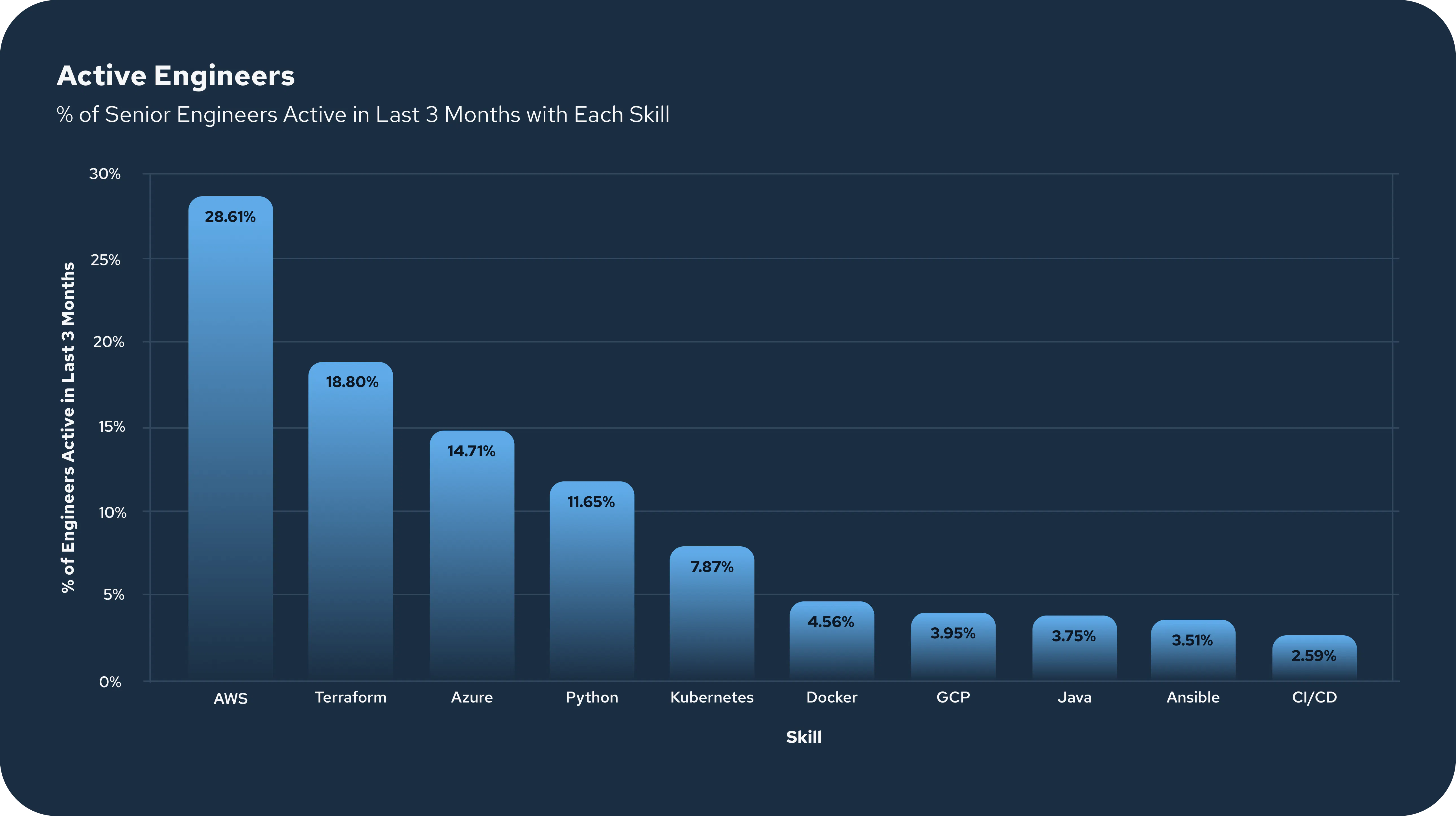
- AWS skills are the most prevalent, found in 28.61% of total active engineers.
- Terraform and Azure skills are the next most common, found in 18.80% and 14.71% of total active engineers respectively.
- Java, Ansible, and Ci/CD are the least prevalent skills for DevOps Engineers.
Demand Index
The number of DevOps Engineers available with this core skill, divided by the number of live positions seeking this core skill. A lower score suggests a more competitive position to hire for.
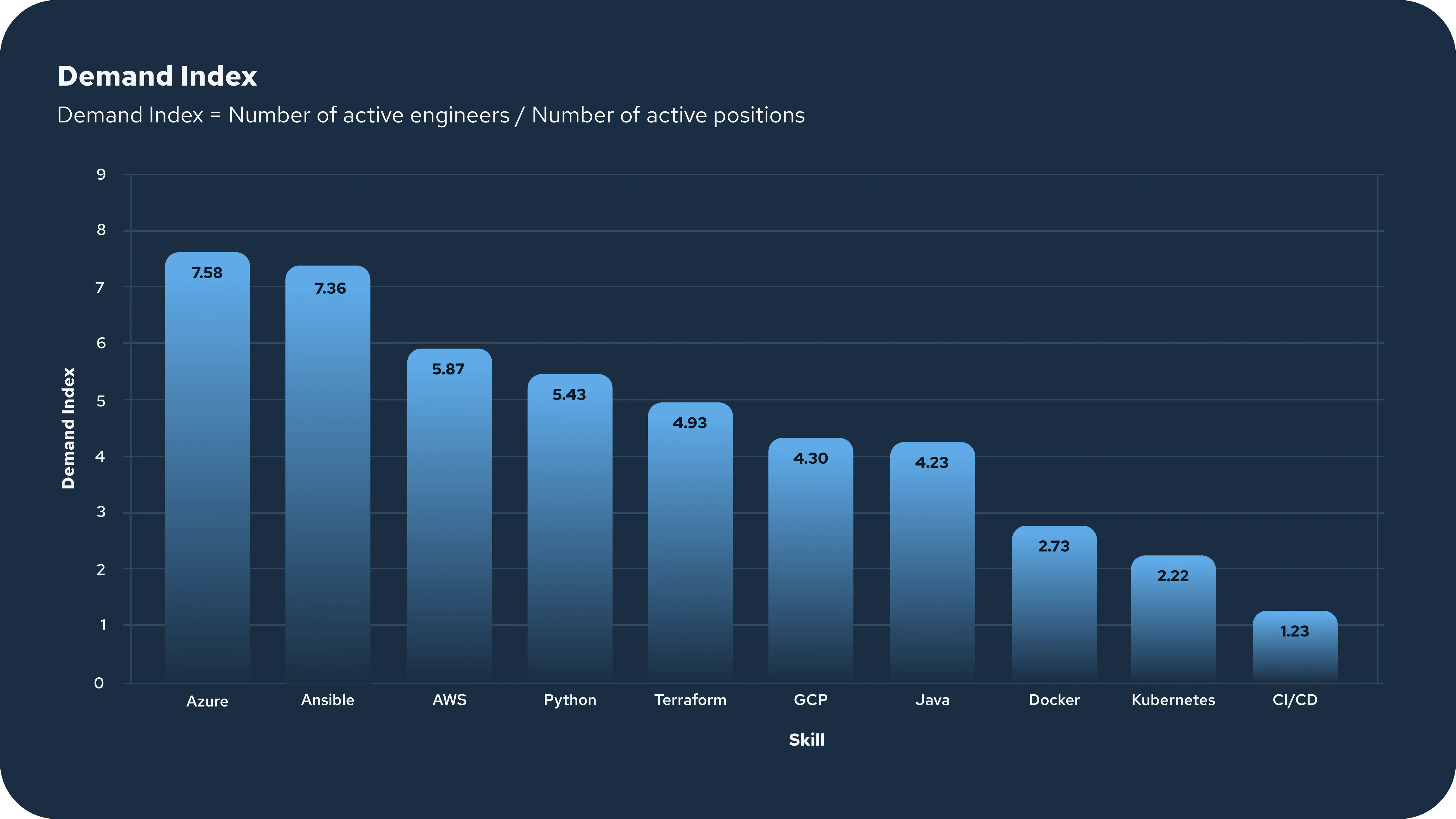
- CI/CD, Kubernetes, and Docker skills have the lowest Demand Indexes (1.23, 2.22, and 2.73 respectively) meaning they are in high demand, making hiring potentially challenging.
- AWS is significantly the most common skill, yet its Demand Index of 5.87 puts it 3rd in the list. Despite being highly available, the demand for this skill makes it more difficult to hire than Azure and Ansible.
Just because a skills is prevalent in the market this doesn't mean it will be an easy position to fill, as is shown with AWS. We can also see this with Kubernetes, which is mid-table with availability, but the 2nd highest in demand skill. Understanding the demand for a skill, not just the availability, allows you to strategise your hiring more accurately.
Candidate Preferences
We've analysed preferences from candidates with DevOps-related job titles. As candidates are able to choose multiple preferences, this will include these people in multiple categories.
Job Title
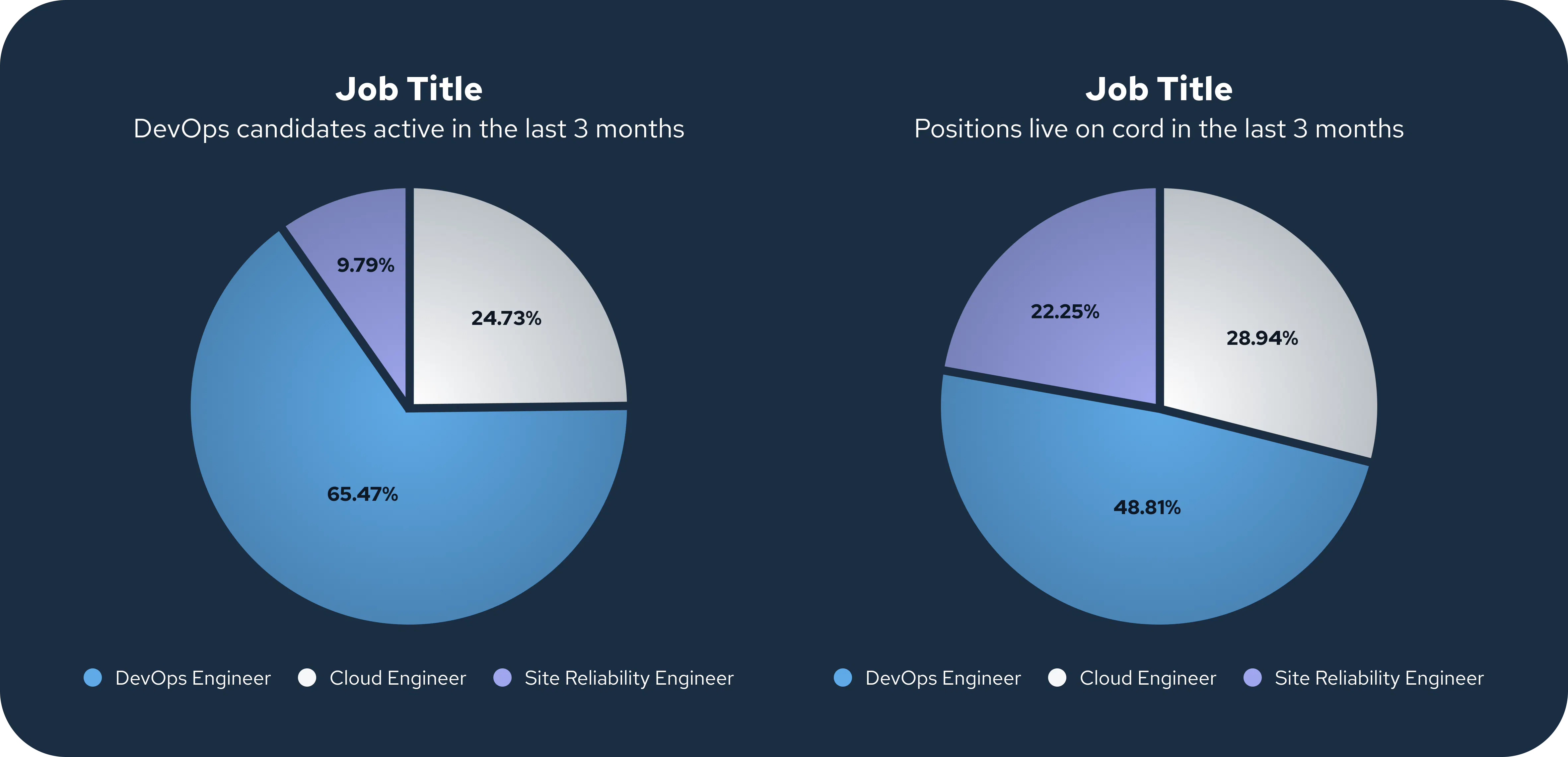
- 'DevOps Engineer' roles are the most preferred, with 65.47% of candidates looking for this role, but these roles make up only 48.81% of the roles offered by companies.
- 'Site Reliability Engineer' roles are preferred by 9.79% of candidates and make up 22.25% of the roles being offered by companies.
There are considerably more companies seeking a Site Reliability Engineer than available in the market. At the same time, there are more DevOps Engineers available than demand from companies. Consider if you could cross over a DevOps Engineer into your SRE role to make hiring easier.
Remote Working
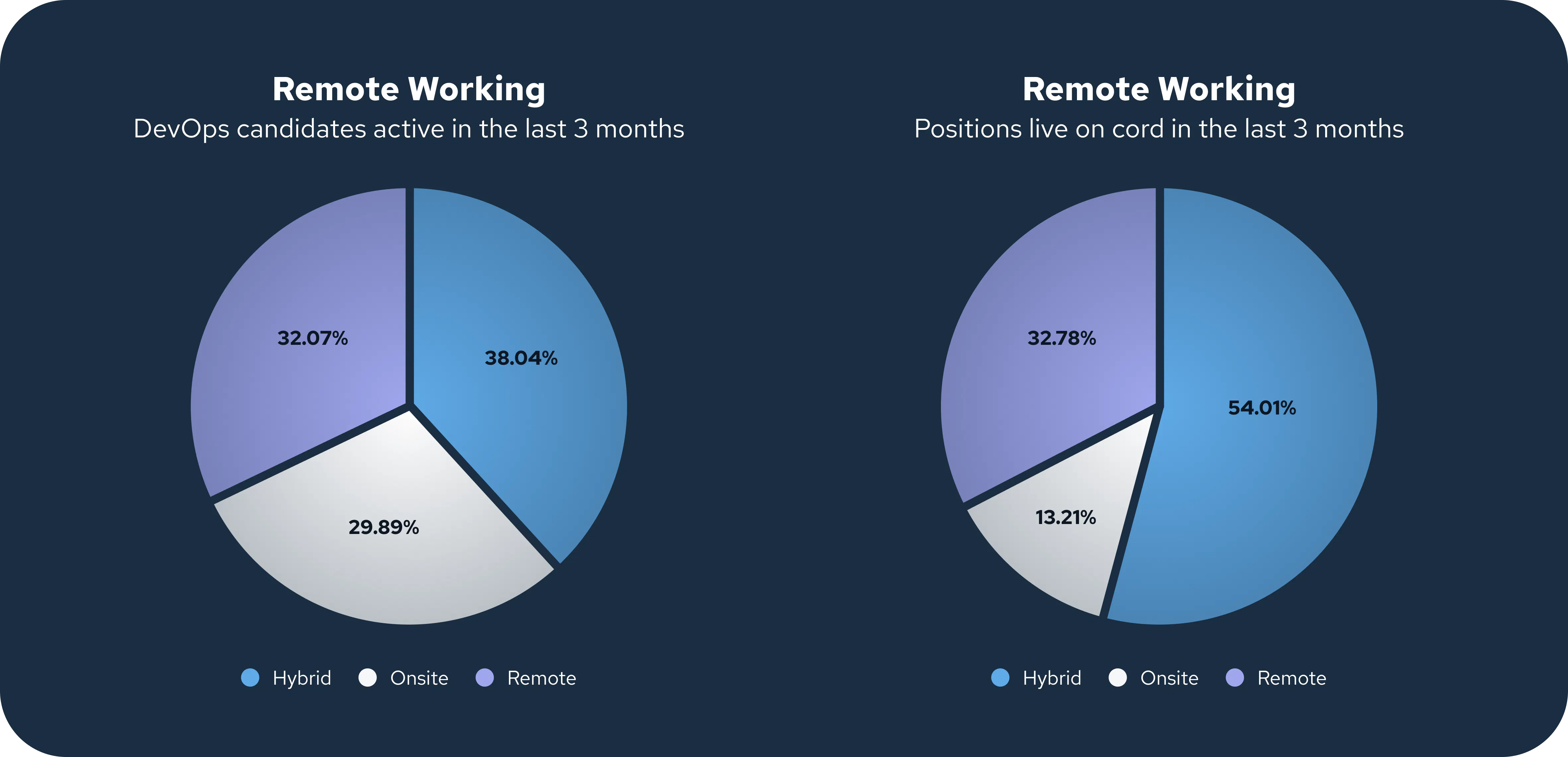
- 'Hybrid' work setups are preferred by 38.04% of candidates and make up 54.01% of the setups being offered by companies.
- 'Onsite' work setups are preferred by 29.89% of candidates but only make up 13.21% of the setups being offered by companies.
The rhetoric on remote working policies often focuses on the importance of catering to fully-remote work, however this data shows there is a considerable portion of the market looking for on-site work instead. It's important to be as flexible as you can with your remote work policies, to cover not only those who want to work remotely, but also those that don't.
Company Size
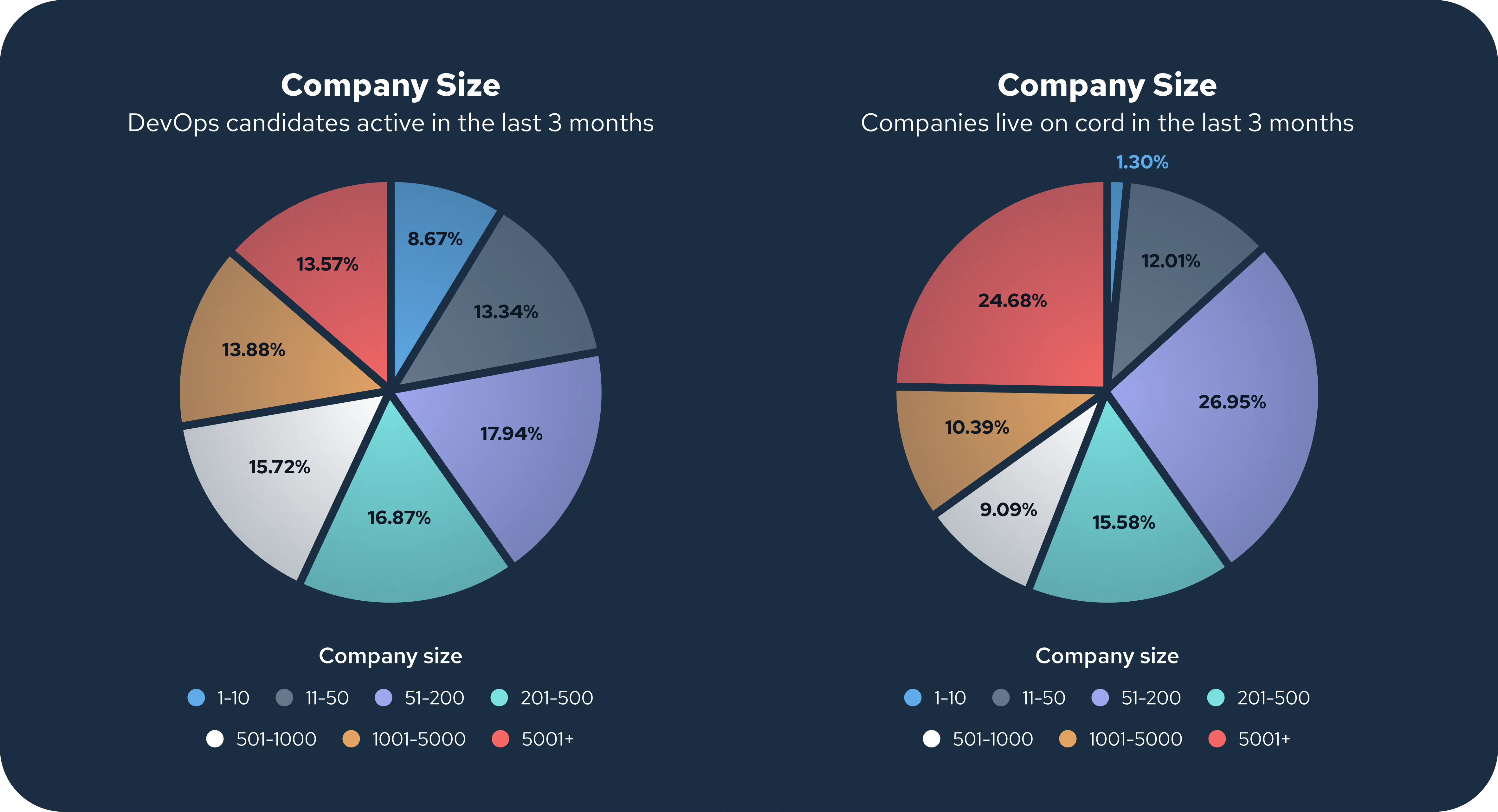
- Companies with '1 - 10' employees are preferred by 8.67% of candidates but only make up 1.30% of the companies hiring
- On the other end of the spectrum, companies with '51 - 200' employees are preferred by 17.94% of candidates but make up a larger 26.95% of the companies hiring.
Larger companies are less likely to be a DevOps Engineers first choice. It's important to highlight the benefits of working for a larger company in your employer brand, to help attract candidates to you.
Job Titles: In Depth
Below we have compared salaries and demand for engineers with DevOps, Cloud, and Site Reliability job titles.
Salary
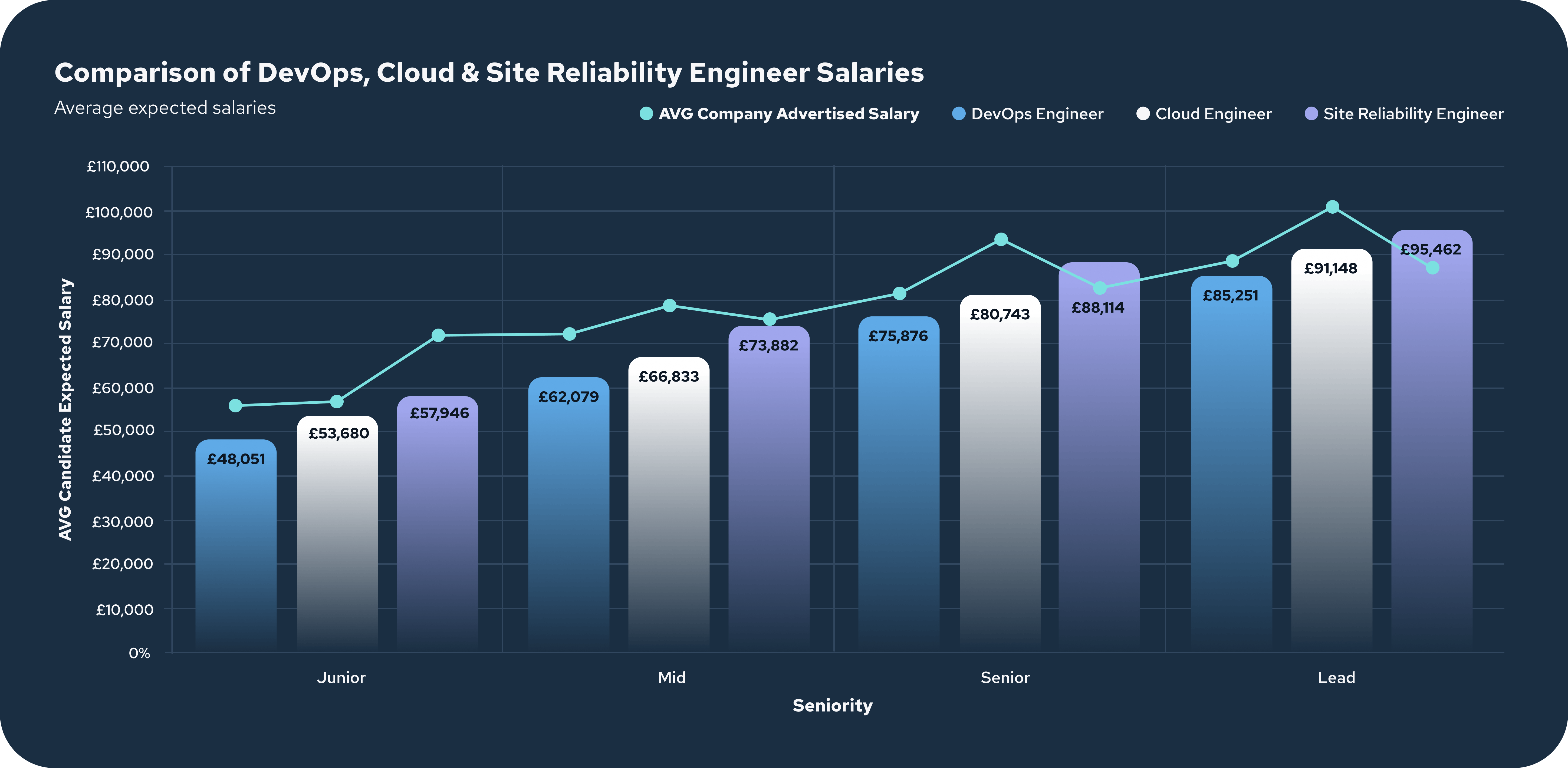
- Site Reliability Engineers consistently have the highest salary expectations across all seniorities. However, other than at the Junior level, Cloud Engineers have the highest advertised salaries from companies.
- Senior and Lead Site Reliability Engineer positions are the only roles to be offered lower than candidate expectations.
Companies are typically underpaying Site Reliability Engineers on average, yet exceeding expectations for Cloud Engineers. Properly benchmarking your salary will ensure you the best chance of securing talent, without overpaying.
Availability
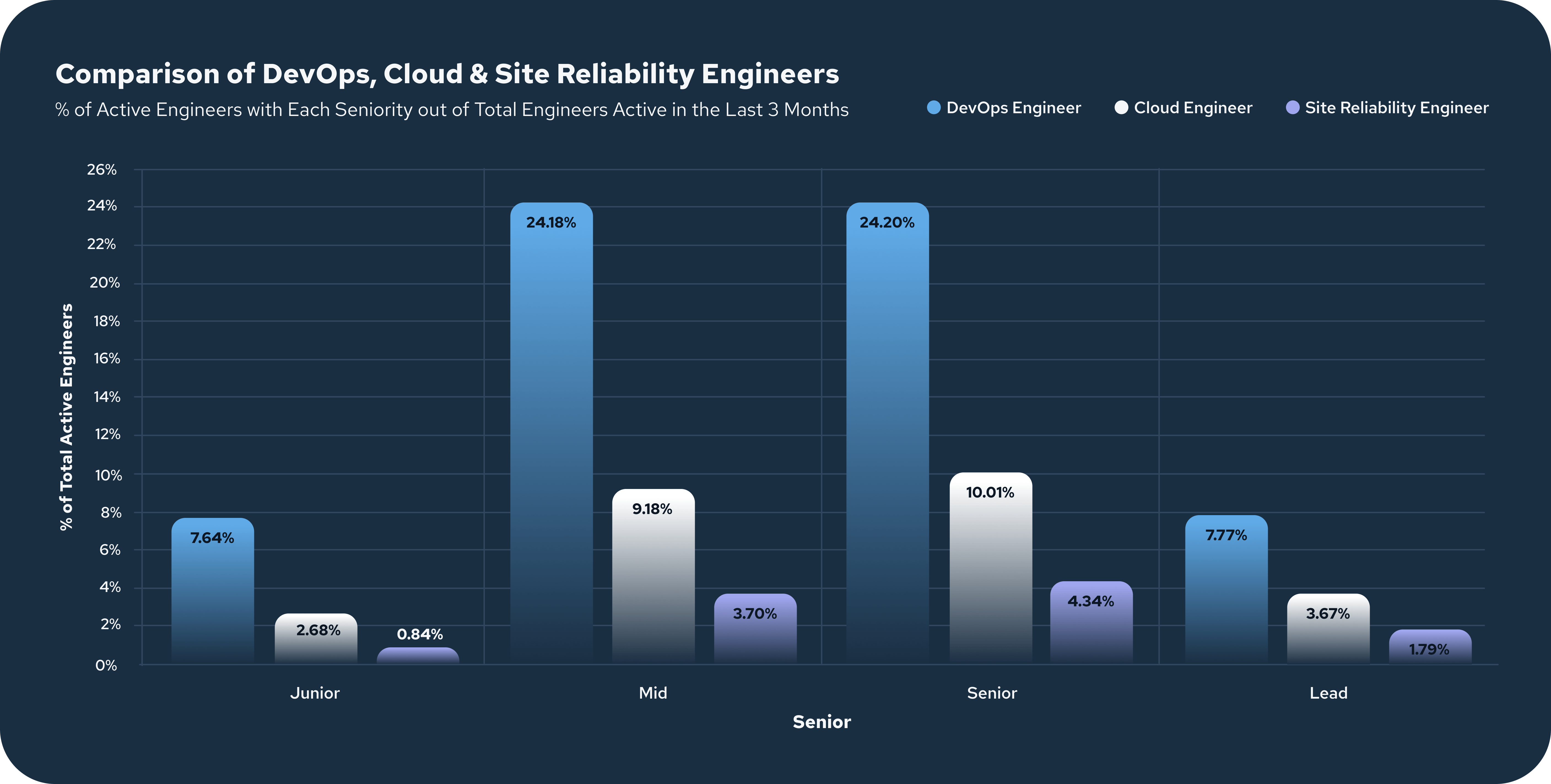
- DevOps Engineers are the most prevalent across all seniorities, with Senior DevOps Engineers making up the largest group at 24.20% and mid-level with 24.18% of active engineers.
- Site Reliability Engineers are the least available, with Junior Site Reliability Engineers being the smallest group, with just 0.84% of the market.
- Senior-level engineers are the most available for each job title.
Demand Index
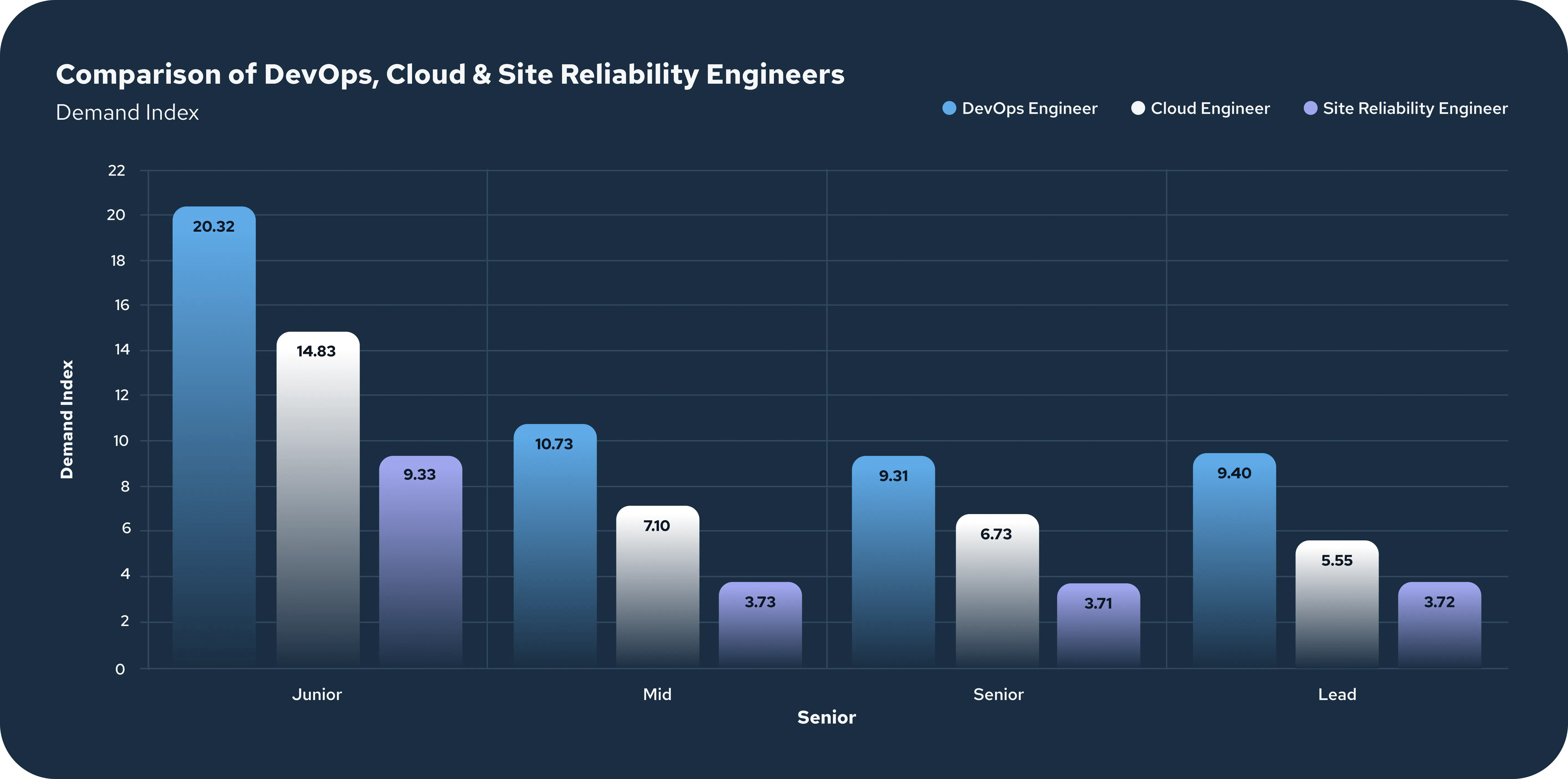
- Junior DevOps Engineers, with a Demand Index of 20.32, are the most readily available and constitute 7.64% of total active engineers.
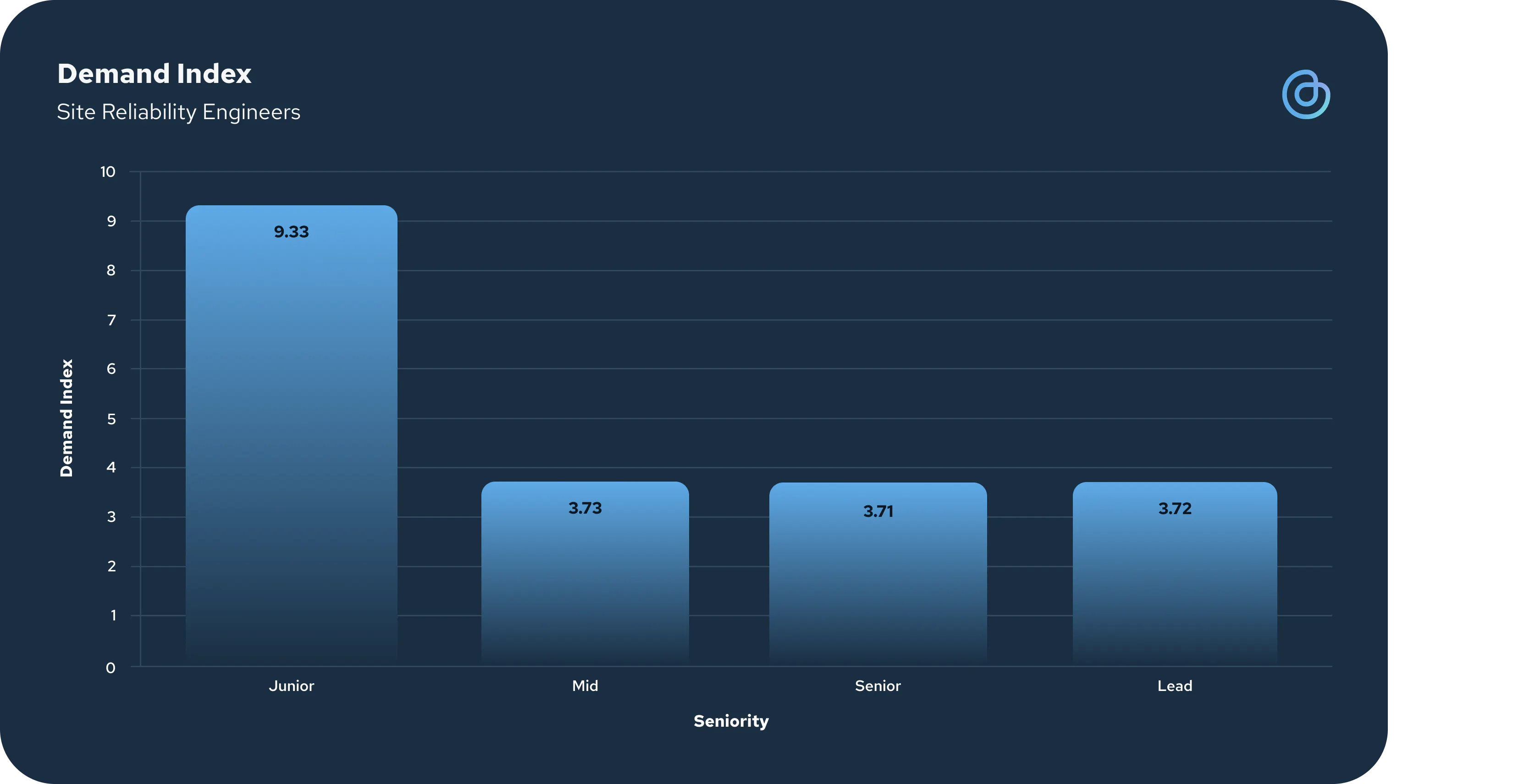
- Junior Site Reliability Engineers, with a Demand Index of 9.33, are less common and constitute only 0.84% of total active engineers, indicating fewer candidates but easier hiring.
Despite a significantly higher availability for Senior and Mid DevOps Engineers, the demand for these two groups puts their Demand Index relatively similar to other job titles, meaning although they are common in the market they may still be difficult to hire.
DevOps Engineers
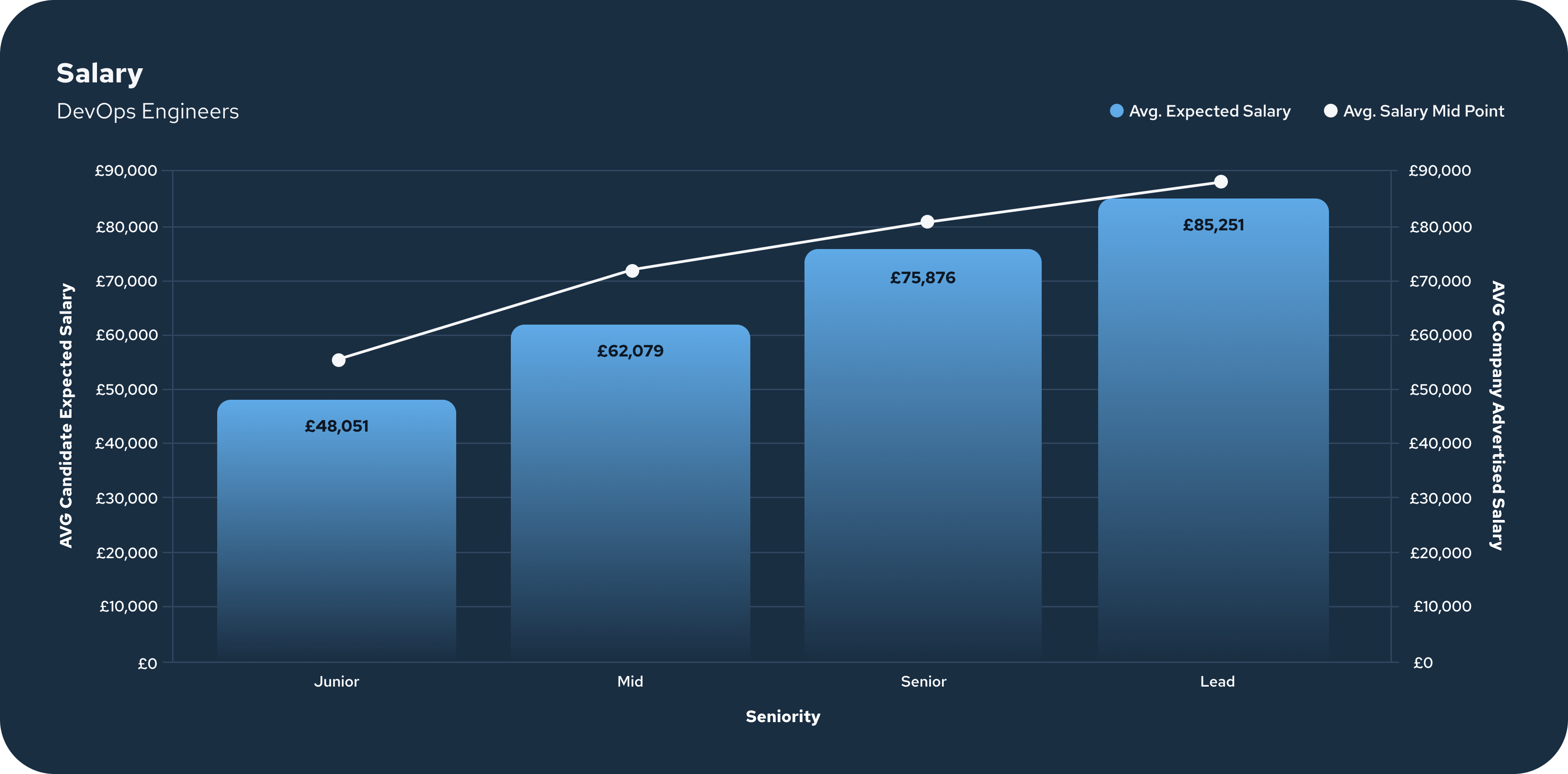
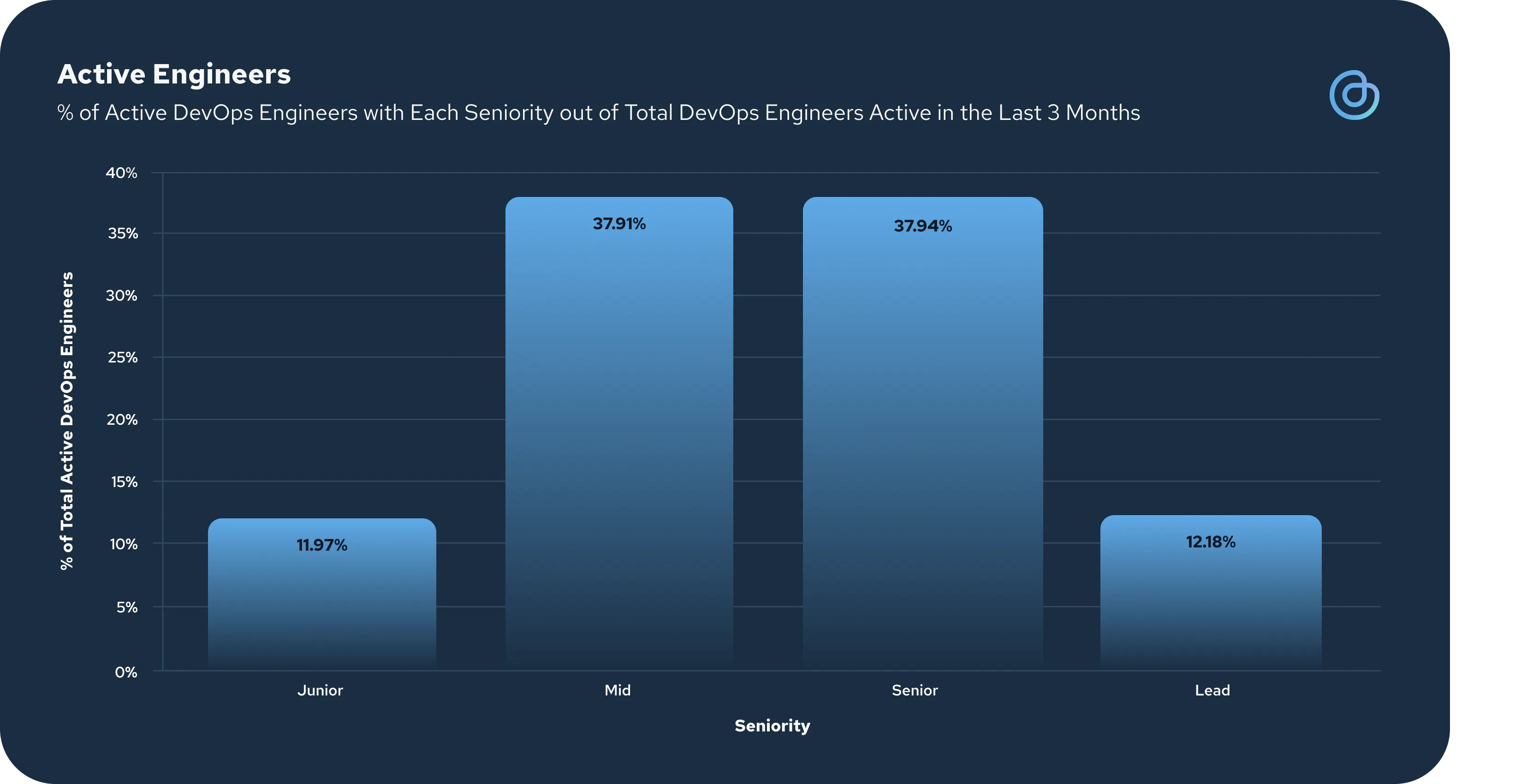

- Companies are generally willing to offer more than what DevOps Engineer candidates expect. On average, DevOps Engineers expect a salary of approximately £67,814, while companies are offering an average salary of £74,329.
- Junior DevOps Engineers, although fewer in the market, are less in demand and potentially easier to hire.
- Despite the high availability of Senior DevOps engineers, they are more in demand compared to other seniority levels, indicating a greater challenge in hiring for these roles.
Cloud Engineers
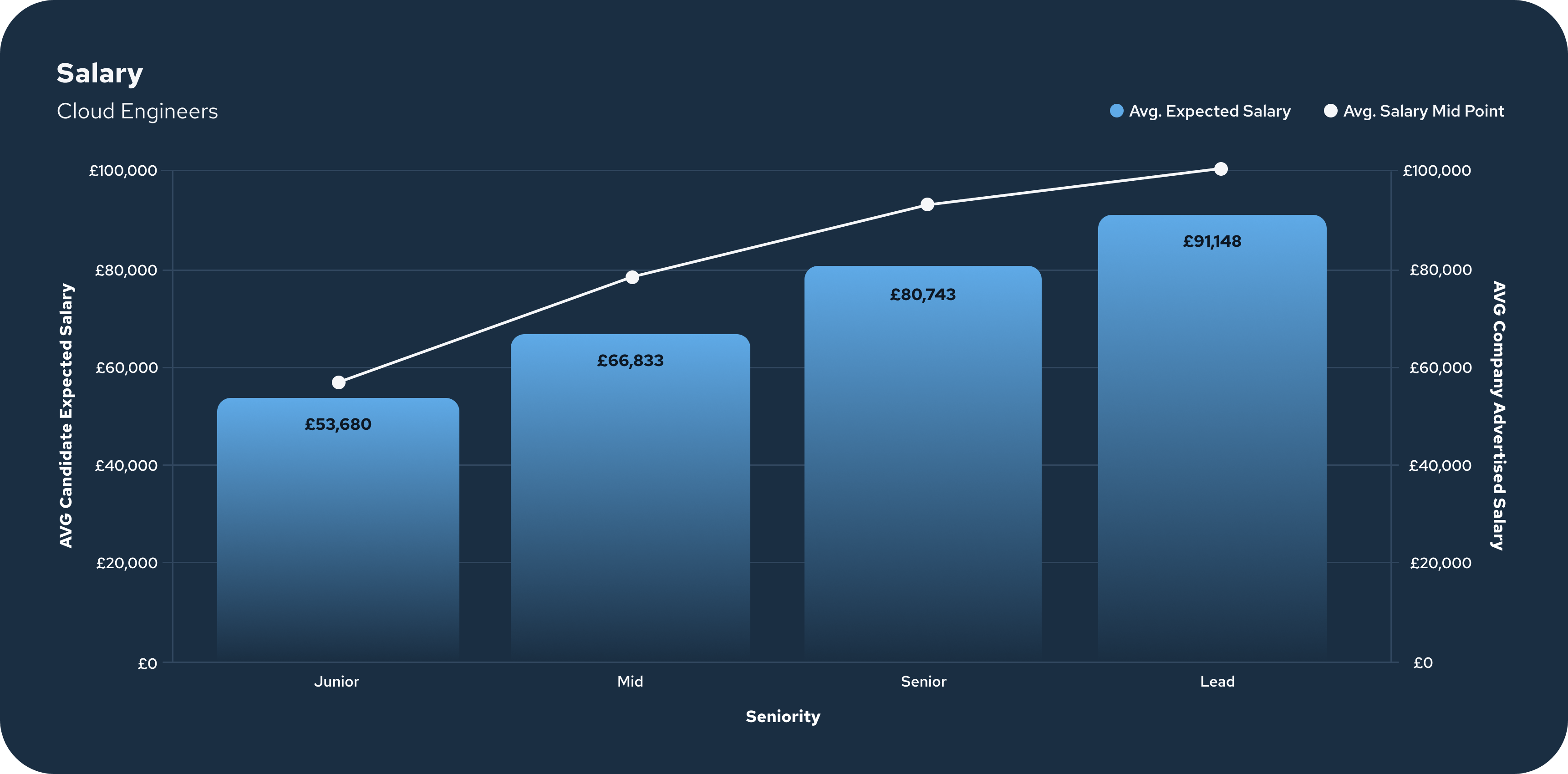
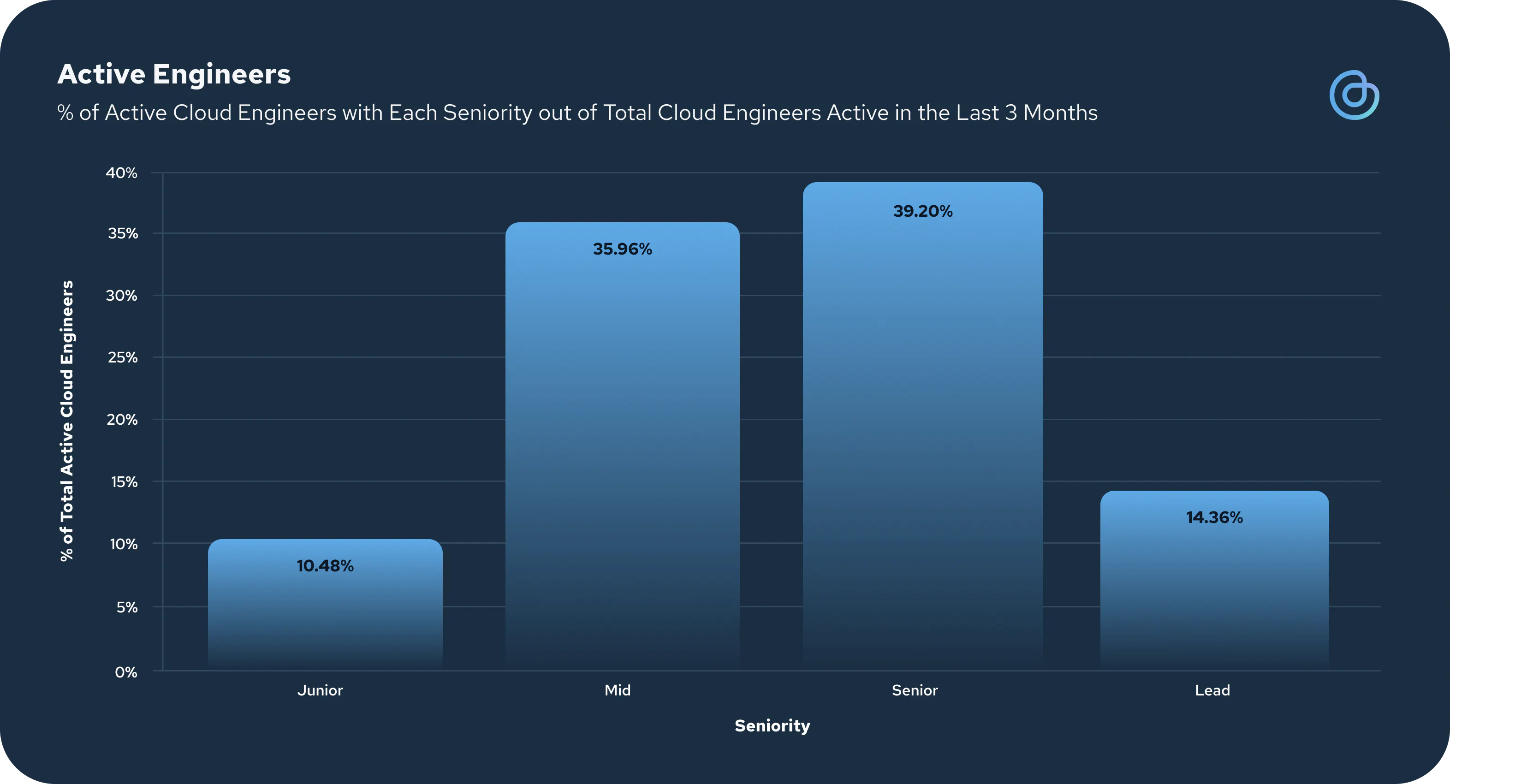
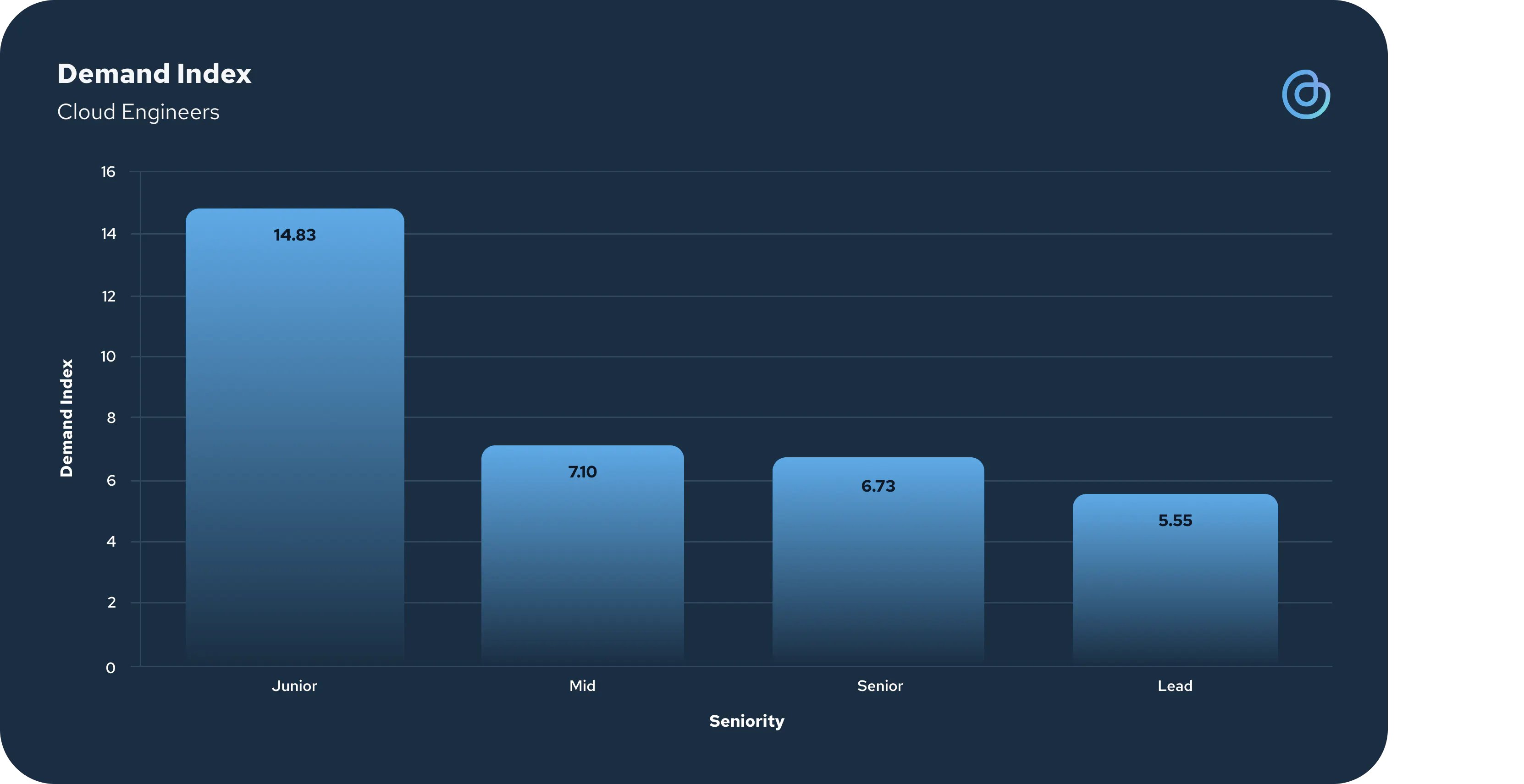
Cloud Engineers generally follow the same trends as DevOps Engineers:
- Cloud Engineers have a lower salary expectation than what is being offered. On average, Cloud Engineers expect a salary of £73,101, while companies are offering an average salary of £82,259.
- Senior and Lead engineers are more available in the market but also more in demand, making hiring for these roles more challenging.
- Junior Cloud Engineers, despite being less available, are easier to hire due to lesser demand.
Site Reliability Engineers
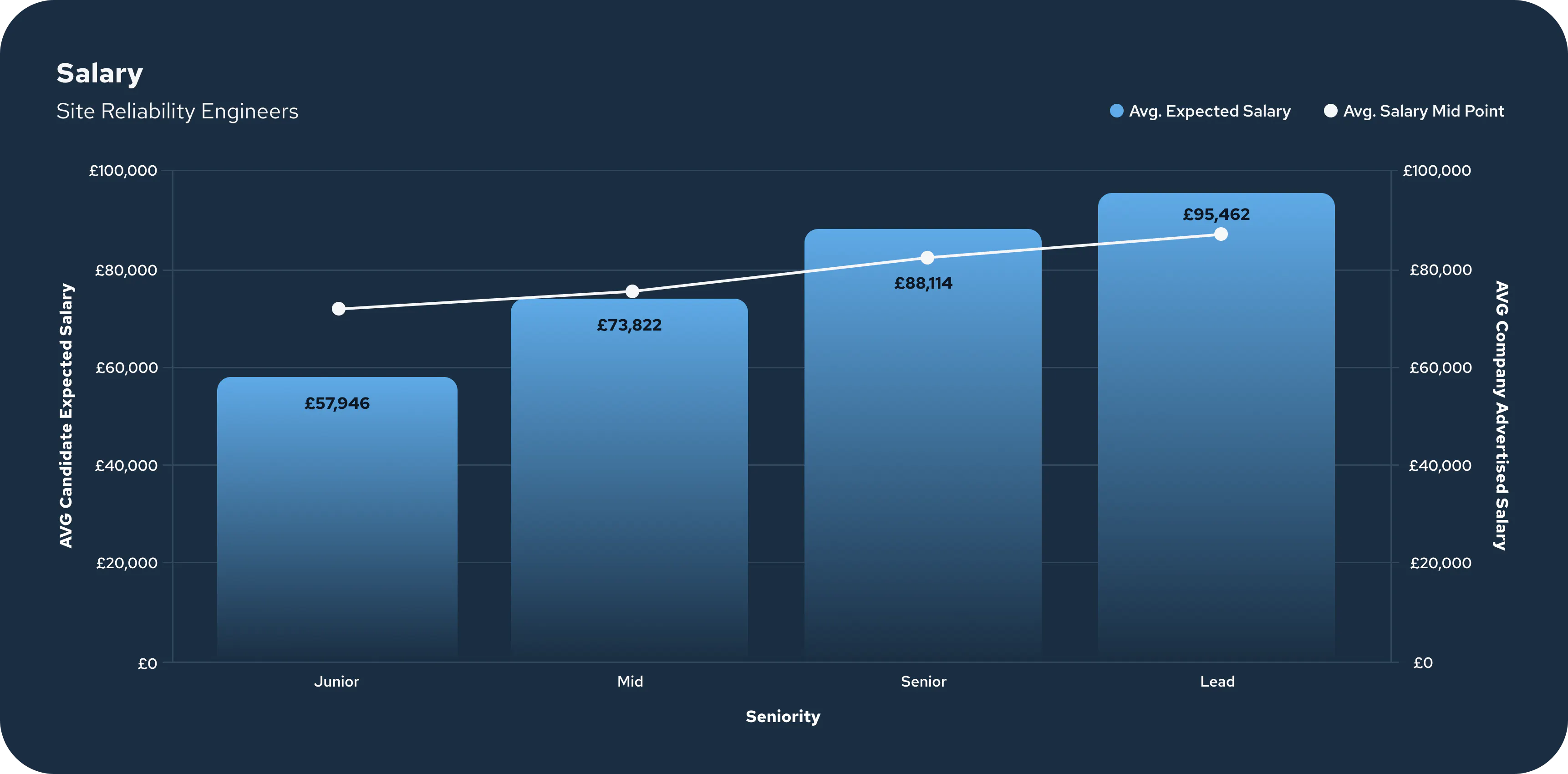
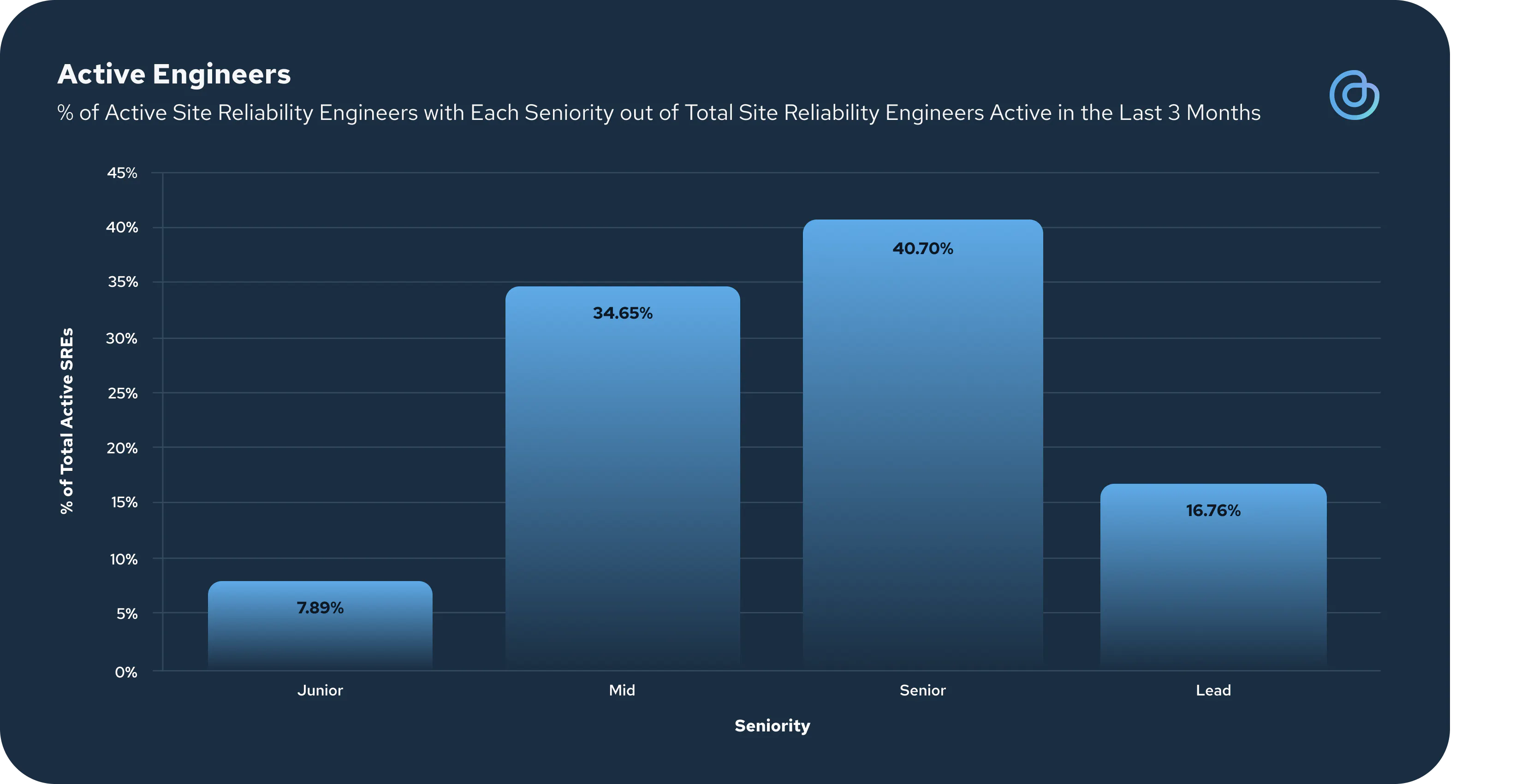
Site Reliability Engineers generally follow similar trends to the previous two, however there are some differences:
- Whilst companies salaries are still higher on average than expected salaries, this is a much smaller difference than the previous group (£79,032 and £78,851 respectively)
- Site Reliability Engineers are also the only group where some salary expectations are higher than what is on offer, which we can see with Senior and Lead engineers.
- Looking at availability and Demand Index, these then follow the same pattern. There are more Senior engineers, however their demand make them comparatively difficult to hire for. Whilst there are fewer Junior Engineers, the low demand make them relatively easy to hire.
Conclusion
By utilising this data, we hope you can build effective strategies that target the right DevOps Engineers for your position and ultimately increase your chances of hiring them.
We will be building further, data driven reports in our Hiring Insights page. If you have any questions, feedback, or requests for further research, please email rebecca@cord.co.

Was this content useful?
You might also like

Talent Landscape Reports
Talent Landscape Report: Developers
Data-led insights on the salary, availability, demand and preferences of developers looking for work.
Candidate insights
Applications Vs Sourcing: What's the best way to make hires?
Analysis on market changes and the most effective way to make direct hires.

Candidate insights
Hiring In-Demand Talent in 2023
A data-led report on how the behaviour of Top Talent differs to the rest of the market