 cord
cordFinding courage at work

Ines Elloumi, Senior Product Manager
over 6 months agoWhat is imposter syndrome? How can I overcome it?
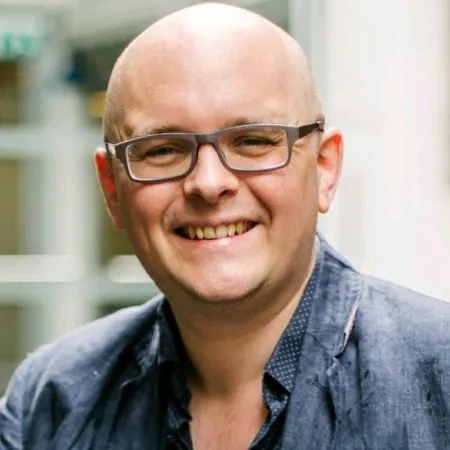
George Bevis, CEO, CanDo
over 6 months agoShould I be intimidated by other peoples’ ability?
Even the people who would seem, to an outsider's lens, to be the absolute masters in any context, when you work with them really, really close up, you realise they're still winging it too and they would disagree with each other on lots of questions. And they're not that good. So the curve of expertise seems incredibly steep, but at some point it levels off and with much, much more experience, you don't get that much better, and you can be very, very celebrated without necessarily being that much better than you were with a lot less experience. And any stages before that, you can feel like these people must be so much more remarkably capable and all the rest of it than you, but actually, I don't think that is always true.

Nick, Co-founder & CEO
over 6 months agoWhat if I’m afraid of making decisions?
Maybe it sounds too simplistic, but it's something that myself and my brother have always told each other, all the way through our lives. And that is, very simply, to back yourself in these decisions. And by that, I mean, when you're weighing up a difficult decision, lots of people have lots of different ways of doing it. I'm quite an analytical person. I'll just make a list of things that I enjoy things I don't like and want to do less of, things I think I'm good at, things I don't think I'm good at, but can work on. There's lots of different ways you can try and weigh it up. But it will never really help you make the big, scary decision. It just helps you think through it. But ultimately you still have to have some emotive input that makes you take a big, scary, risky decision.
And so the approach I use is to look at it and just think, do you back yourself? And the answer should always be yes, you do back yourself to do the big, scary thing. And if you then take that, then taking these leaps can seem so much easier and do the lists, do the pros and cons, do the stuff I'm good at, stuff I'm not good at. But ultimately, I think it comes down to an emotive decision when you got to do something scary. It's like you have all the information, but ultimately you as a human being have got to make the decision. And that's why I think just back yourself. Believe you can do it, know you can do it. And the worst that comes out is that you fail and you learn a lot along the way.

Juan, Founder & CEO
over 6 months agoMight fear of failure hold me back?
It all starts in the mind and it manifests itself in some form. You are your own worst enemy because it is a choice to believe the doubt or to believe the uncertainty that's in front of you. I think it's quite uncomfortable to fail every day, and I think it is not something that is discussed early on in childhood. Early on it's about getting the grade and doing good and failure is seen as bad: bad reports, unhappy parents and so on.
But in startups, the only distinction between startups that fail and startups that succeed is that they have had marginally more successes than failures. They've all had the same amount of failures, but the successful startups have marginally more successes. So, there's a mentality shift, I think, and when new people come into the company, one of the first things I try and do, subtly, is to help them fail, which sounds weird, but make sure that their relationship with failure is one that will help them progress. The fear of failure is what stops us doing our best work.

David, CTO
over 6 months agoHow can I overcome imposter syndrome?
So I spent over three or four years there, I think four years actually, rebuilding the team, rebuilding the platform, and I guess actually trying to quash imposter syndrome. I worried - the successes I've had at Visa, are they really my successes? Or is it other people around me that have achieved that? So let's go start from scratch again and see if you can repeat some of the things that went well. And I guess, get the confidence for the long term. And again, it was successful.
People
Ines Elloumi
Senior Product Manager
George Bevis
CEO, CanDo
Nick
Co-founder & CEO
Discussions you may like
Making big career decisions
Discussion started over 6 months ago.



Navigating an interview process
Discussion started over 6 months ago.







I started comparing myself to other people. I started noticing that I wasn't as articulate as other people. I was handed very ambiguous problems to solve.
And when I wouldn't find the solution easily, I would feel maybe I was not smart enough. And then I got into a cycle of self doubt, and you can call that imposter syndrome. I don't know if I can diagnose myself, but getting into this cycle of self doubt and thinking that maybe you fooled your interviewer and you weren't supposed to get hired for this role, but you made it through the system. And it feels pretty bad. I've been through sometimes where I got really anxious because of it. And it was counterproductive because none of it is true. It's mostly your head talking to you.
It's fear talking. But it's hard to realise that in the moment, I think in the moment, the feelings can be a bit overwhelming and you can feel you actually don't belong at all, and you should just give up and go somewhere else. But that's when persistence matters in a way: persistence, and staying in this situation and accepting the challenge and talking to people as well. I think that's what really helped me.