 cord
cordBecoming a founder
Anonymous, Unknown
over 6 months agoShould I always prioritise growing my business?
Anonymous, Unknown
over 6 months agoDo I always need to see eye-to-eye with my co-founder?
I would personally just prefer in my ideal version to see, I share the ownership of this company with Jason Fried. And even though we see eye to eye in almost everything, it's not everything. So there are times, with anyone in any circumstances, where there are degrees of compromise or even discontent. But to a large degree, I am able to, together with Jason, to draw conclusions from the introspection when there is incongruence between how the company's running and what we believe to be right, and just, and good, and all the other virtues you could stack on that, to change course. And we've done that several times over the years.
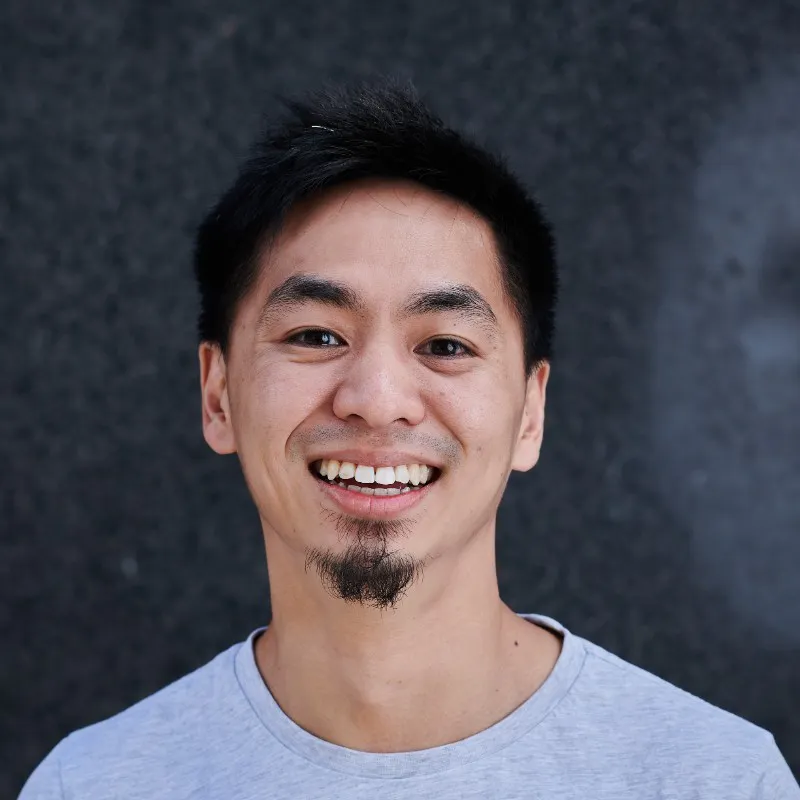
Tim Chong, Co-founder & CEO, Yonder
over 6 months agoWhy do founders start businesses?
There is this niggling feeling that just eats at you for just so long that you're like, "I can't not do it." It actually got to the point where it was like, "I can't not do it." That's actually honestly the conclusion I came to. I got into fintech in 2016, not through the classical fintech. I was living in Kenya and I met with the team who started in M-Pesa, which is a mobile payments product and completely revolutionized how the country moved money and spent. At one point half the GDP of Kenya flowed through M-Pesa. I honestly felt like I was on the road to Damascus, I was like, "Holy cow, this is incredible. I want to do something in this space."
That was actually the reason why we moved to London. That was a big factor of moving to London, one of the best places to build a fintech. It's this niggling feeling of, "I can't not do it now. I can't." It's just there and it's niggling there. A lot of people say, "I just grew up knowing I wanted to start this company." I would say that was not true for me. I didn't wake up out of my mother's womb being like, "I want to start a company doing X." It was definitely a gradual thing over many years being like, "I see this problem. I see this problem. I see this problem. I see this problem. Why hasn't anyone fixed it? Why hasn't anyone done anything about it?"
That realization: "Why don't you go do it?" Like, “Tim, why don't you go do it? This is a niggling feeling you've had for so many years now. Go and solve that problem." It does sound a bit cliche, but it's genuinely true.

Paul, CTO
over 6 months agoWhat might I gain from founding a start-up?
Part of the decision that many of us make working in startups and particularly founding startups is that you are in essence speculating that you will do well, sufficient that the amount of time and effort that the monumental effort you put into building a business pays off by giving you the opportunity to not have to work.
So very, very calculatedly, I could go and work at Google or wherever for a lot of money, work not quite as insanely hard, and be very comfortable for my life. Very, very lucky to have that option to me. However, I choose to build a business, do the things I care about, and part of the payoff of that is, if it does well, I have the opportunity to not have to work sooner. So treat that as one data point or one part of the view of this. That being so, the journey of the startup journey, it is not okay to be, "I'm going to set aside the enjoyment of living, the enjoyment of life to just think about like, 'Well, if I can just get through this grind and things work out and my opportunity space opens up. Doesn't mean I won't work, but I might not have to work.'"
It's very, very important to me, and I have learned this, to focus on the enjoyment of the journey. And that means being kind to myself, being kind to others, being more compassionate, understanding, seeking to understand more about how people behave and how people do the things that they do. And I think that for me has been a really big change in my outlook.

Sasha, CEO
over 6 months agoShould I tackle a problem I’m passionate about?
I think I always knew that if I was going to start a start-up, it had to be something that I felt passionately about and something that I felt that was somehow good for the world. So I came in thinking like, oh, maybe I'll work in healthcare or in green energy or something that I felt was tech for good, felt important. So I feel like I was always going to do something in the tech for good space and could never have done something, I don't know, to do with something that just makes a process more efficient, for example.
People
Tim Chong
Co-founder & CEO, Yonder
Paul
CTO
Sasha
CEO
Discussions you may like
Joining a start-up
Discussion started over 6 months ago.

Making big career decisions
Discussion started over 6 months ago.







We had a really big change of course in 2014 when we decided that our product portfolio for thriving successful products were taking the company in a direction we didn't want it to go. That we were, at the time, 40 some people. We're realizing with a product portfolio of four applications, we couldn't do them all justice to the level of quality and dedication that we wanted. So we needed to either become a much larger company or let go of some products. And for most companies, what are you talking about incongruence? Of course, you should just hire more people. If you have the business to support it, you should grow, grow, grow, grow. And because of that incongruence and because of the independence, we were able to take a very counterintuitive, perhaps even controversial, choice to say, "Nope, do you know what? Instead of growing, let's just let go of three of the products, even though they are thriving growing businesses, and focus on the one that's doing the best. We can manage the one with the team we have and we can stay roughly about the size that we are until we should decide otherwise."